Pasta Salad Like Yaya Made It—But with Less Fuss
If you’ve ever found yourself craving something tangy, fresh, and a little more exciting than your run-of-the-mill pasta, let me tell you about this Greek Pasta Salad With Feta. The first time I made this, it was basically a desperate act, fridge-cleanout style, on one of those sticky-hot summer evenings when the very idea of turning on my oven was enough to make me melt into the couch. My cousin Niko claims this is the only salad he’ll happily eat without hunting for the fries underneath. (He’s not much for greens.)
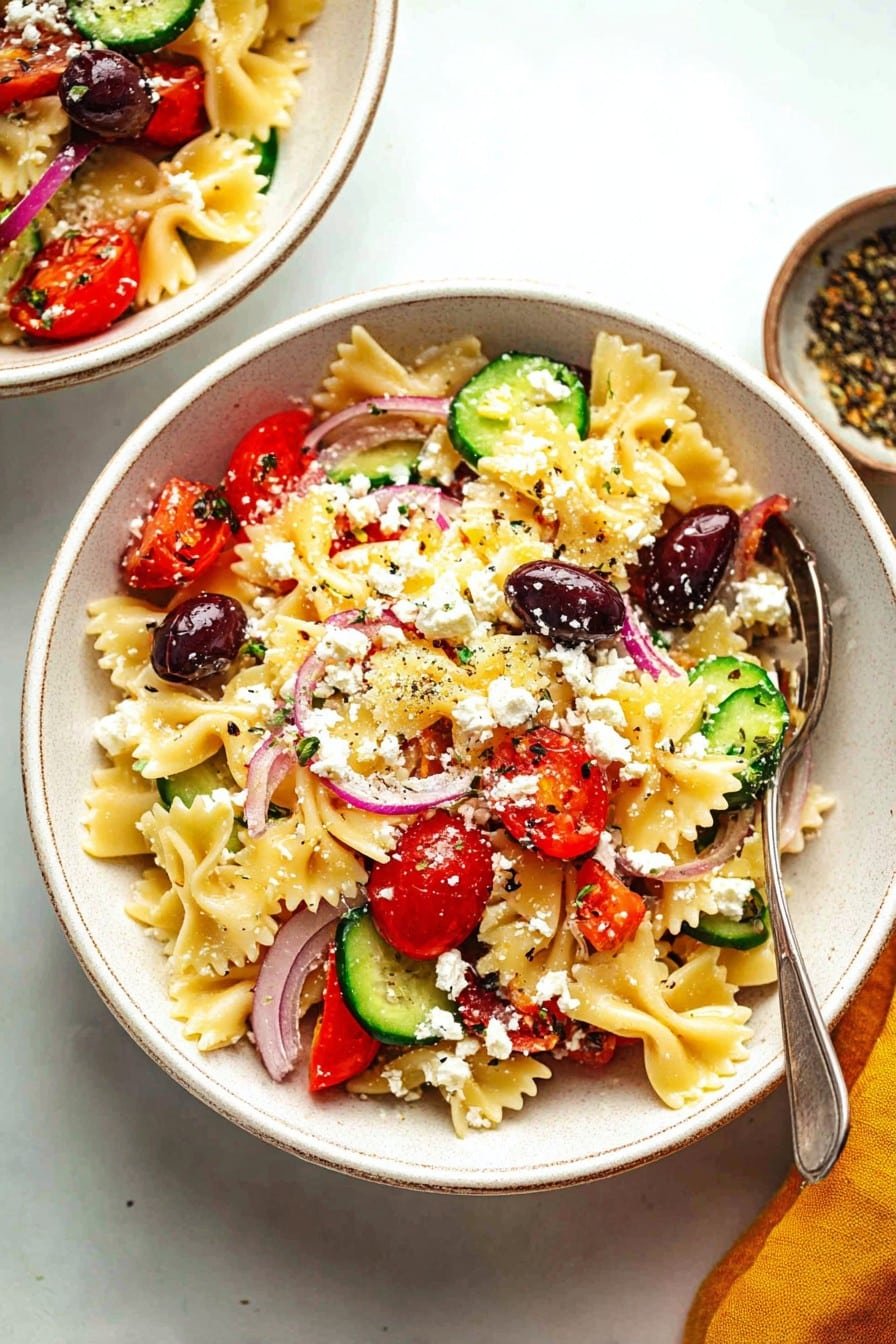
I grew up watching my grandma (yaya, if you’re Greek or just pretending for the afternoon) crumble her feta straight over a huge bowl like it was sunshine in cheese form. I never had her patience for making every little thing from scratch—if you do, hats off!—but this salad is forgiving of shortcuts. Actually, I think it’s better for them. Sorry, Yaya.
Why You’ll Like Making This
I whip out this Greek pasta salad when I want something bright but need dinner in, like, 20 minutes tops. My family goes bonkers for it (except for one strange uncle who picks out the olives, but he’s a lost cause); it’s crisp, tangy, and oddly satisfying despite being entirely plant-based. Since everything gets tossed in one big bowl, it’s also fewer dishes; the fewer, the better, honestly. Also, once you get the hang of the dressing, you’ll want to pour it on basically everything. I used to mess up the pasta timing and end up with either gluey noodles or crunchy ones, but trust me, letting the pasta cool a bit really helps. You live and learn!
What You Need (and a Few Swaps I’ve Tried)
- 250g (about 8 oz) short pasta (penne, rotini, or whatever’s hanging around—I’ve even used farfalle in a pinch; elbows, not so much)
- 1 cup cherry tomatoes, halved (or quartered if I’m feeling patient; grape tomatoes are fine, too)
- 1 medium cucumber, diced (Persian or English is what I like, but regular does the trick, just scoop out the seeds if you can be bothered)
- 1/2 small red onion, thinly sliced (soaked in cold water if you don’t want onion-y breath all day)
- 1/2 cup Kalamata olives, pitted and halved (green olives work in a pinch—I won’t tell)
- 3/4 cup feta cheese, crumbled (my grandmother always insisted on Dodoni, but to be honest, any feta you like is fine, as long as it’s not the pre-crumbled dry stuff)
- 1/4 cup extra virgin olive oil (budget olive oil works, but you’ll taste the difference—up to you!)
- 2 tablespoons red wine vinegar (gone emergency mode with apple cider vinegar before, outcome: not bad)
- 1 teaspoon dried oregano (fresh is glorious if you can swing it, but don’t sweat it)
- 1 clove garlic, minced (sometimes I use that squeezy tube stuff “from” the fridge… shh)
- Salt and pepper, to taste (I like lots of black pepper; salt, not so much with all that feta)
Here’s What To Do—Step by Step, more or less
- Bring a generous pot of salted water to a boil and cook your pasta until just al dente (check the box, or taste test—seriously, don’t leave the room; pasta keeps you humble).
- Drain the pasta and rinse it under cool water, unless you’re a hardcore Italian who can’t bear to do that—sometimes I skip the rinse, but if you want cold salad, go ahead. Set aside to cool a little (this is usually where I sneak a bite—quality control, obviously).
- While the pasta is cooling, chop your tomatoes, cucumber, onion, and olives. I occasionally forget the onions on the side if I’m bringing this to work—no regrets!
- In a big salad bowl, whisk together olive oil, red wine vinegar, oregano, and minced garlic. If you want extra zip, add a pinch more vinegar. Taste it—don’t be shy. If you spilled a bit of oil like I did last week, just wipe it up and carry on.
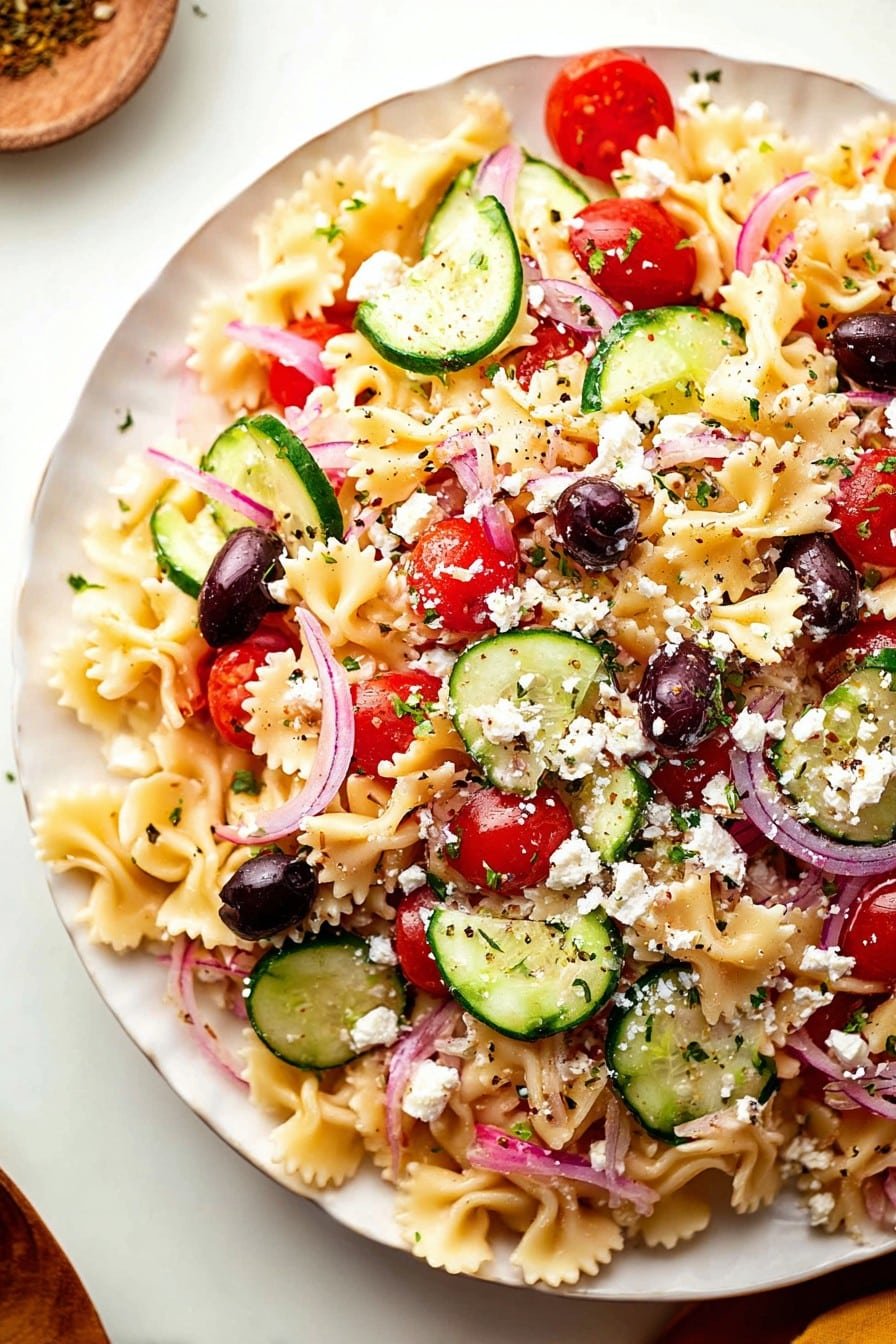
- Add in the cooled pasta, chopped veggies, feta, and olives. Toss gently so you don’t smash the feta into oblivion (unless you love creamy bits everywhere, then be vigorous!).
- Season generously with cracked black pepper and a bit of salt; toss again right before serving. If it looks a bit weird and clumpy, don’t worry—it always comes together on the plate. Promise.
Notes—from my kitchen chaos
- If you want a really punchy salad, let it sit for at least 30 minutes in the fridge. Actually, I think it’s better the next day, if you can stand the wait.
- Forgot to buy cucumber? Don’t panic—add extra tomatoes or even some chopped bell pepper.
- Sometimes I just eyeball the dressing and it turns out fine—don’t stress exact teaspoons.
I’ve Tried These, So You Don’t Have To (or Maybe You Should!)
- Added a bit of cooked, shredded chicken—great if you want protein, but does take it out of “Greek vegetarian salad” territory.
- Once tossed in sun-dried tomatoes instead of fresh. Actually, that one was delicious, just a bit rich.
- Didn’t love it with crumbled goat cheese instead of feta (just… not the same vibe!).
If You Don’t Have the “Right” Equipment
I use my biggest salad bowl for mixing, but if you don’t have one, honestly a big pot works. No whisk? Just stir the dressing with a fork, nobody is checking.
How to Keep It—If You Don’t Eat It All
Seal leftovers in an airtight container and pop in the fridge. It should last about 2-3 days, but honestly, in my house it never lasts more than a day! The flavors deepen and the pasta softens a bit, which I actually like better.
How I Love to Serve It
This is a picnic staple, but we also serve it alongside grilled chicken or lamb in the summer. Sometimes I steal a bowl for breakfast—nobody’s judging. It’s also unreal with bread for lunch; you know, to mop up the leftover dressing.
Hard-Won Bits of Wisdom (aka, My Pro Tips)
- Don’t rush cooling the pasta. I once tried tossing it in hot and the feta just melted away—not what I wanted.
- Taste as you go. Actually, I forgot to once and dumped in way too much oregano. Still edible, but more like a scavenger hunt for your tastebuds than a salad.
FAQ (Actual Questions, Honest)
- Can I make this Greek pasta salad ahead of time? Yes, and it’s probably better for it! But add the feta right before serving if you want it distinct.
- What can I use instead of feta? I suppose you could use goat cheese, but, as I learned, it doesn’t have the same salty pop. Maybe try ricotta salata if you’re feeling fancy.
- Does this work gluten free? Absolutely! Just pick your favorite GF pasta. Some get a bit mushy after sitting, but that’s just science, I guess.
- Can I skip the olives? Sure, but I feel like you’ll miss out on that tangy bite. My youngest niece doesn’t like olives; we just leave them on the side for her.
- What if I overcook the pasta? Ah, you’ll survive (still tastes good after a day in the fridge, actually). In emergencies, just call it Greek pasta “mash”—serve with a wink!
- How big is a “handful” for the herbs? I’d say about a tablespoon, give or take. Or, if you have small hands, two. No science here.
And hey, if all else fails, just dump everything in a bowl and call it rustic. More than once I’ve been distracted by the dog barking or my phone buzzing and this salad still came out fine. If you give it a try, let me know how it worked for you—or what wild thing you added. Bon appétit, or should I say, kali orexi!
Ingredients
- 250g (about 8 oz) short pasta (penne, rotini, or whatever’s hanging around—I’ve even used farfalle in a pinch; elbows, not so much)
- 1 cup cherry tomatoes, halved (or quartered if I’m feeling patient; grape tomatoes are fine, too)
- 1 medium cucumber, diced (Persian or English is what I like, but regular does the trick, just scoop out the seeds if you can be bothered)
- 1/2 small red onion, thinly sliced (soaked in cold water if you don’t want onion-y breath all day)
- 1/2 cup Kalamata olives, pitted and halved (green olives work in a pinch—I won’t tell)
- 3/4 cup feta cheese, crumbled (my grandmother always insisted on Dodoni, but to be honest, any feta you like is fine, as long as it’s not the pre-crumbled dry stuff)
- 1/4 cup extra virgin olive oil (budget olive oil works, but you’ll taste the difference—up to you!)
- 2 tablespoons red wine vinegar (gone emergency mode with apple cider vinegar before, outcome: not bad)
- 1 teaspoon dried oregano (fresh is glorious if you can swing it, but don’t sweat it)
- 1 clove garlic, minced (sometimes I use that squeezy tube stuff “from” the fridge… shh)
- Salt and pepper, to taste (I like lots of black pepper; salt, not so much with all that feta)
Instructions
-
1Bring a generous pot of salted water to a boil and cook your pasta until just al dente (check the box, or taste test—seriously, don’t leave the room; pasta keeps you humble).
-
2Drain the pasta and rinse it under cool water, unless you’re a hardcore Italian who can’t bear to do that—sometimes I skip the rinse, but if you want cold salad, go ahead. Set aside to cool a little (this is usually where I sneak a bite—quality control, obviously).
-
3While the pasta is cooling, chop your tomatoes, cucumber, onion, and olives. I occasionally forget the onions on the side if I’m bringing this to work—no regrets!
-
4In a big salad bowl, whisk together olive oil, red wine vinegar, oregano, and minced garlic. If you want extra zip, add a pinch more vinegar. Taste it—don’t be shy. If you spilled a bit of oil like I did last week, just wipe it up and carry on.
-
5Add in the cooled pasta, chopped veggies, feta, and olives. Toss gently so you don’t smash the feta into oblivion (unless you love creamy bits everywhere, then be vigorous!).
-
6Season generously with cracked black pepper and a bit of salt; toss again right before serving. If it looks a bit weird and clumpy, don’t worry—it always comes together on the plate. Promise.
Approximate Information for One Serving
Nutrition Disclaimers
Number of total servings shown is approximate. Actual number of servings will depend on your preferred portion sizes.
Nutritional values shown are general guidelines and reflect information for 1 serving using the ingredients listed, not including any optional ingredients. Actual macros may vary slightly depending on specific brands and types of ingredients used.
To determine the weight of one serving, prepare the recipe as instructed. Weigh the finished recipe, then divide the weight of the finished recipe (not including the weight of the container the food is in) by the desired number of servings. Result will be the weight of one serving.
Did you make this recipe?
Please consider Pinning it!