Let Me Tell You About My Roasted Peach Salad With Burrata Pesto Obsession
Alright, so you wanna know about my roasted peach salad with burrata pesto? Honestly, this salad started out as a happy accident—picture a fridge cleanout on a hot July evening, me too stubborn to order takeaway again, and a couple of way-too-ripe peaches taunting me. Anyway, a few tweaks, a minor pesto crisis (I ran out of pine nuts, oops), and a lot of hope—I made something so tasty my partner actually ate it without complaining about the lack of meat. Surprised? I know I was! Now it’s a running joke in our house that the peach salad is my LBD of summer dinners. Never fancy, but everyone thinks it’s special.
Why You’ll Love This Messy Little Masterpiece
If you ever find yourself holding peaches that are a couple of days past their prime (or, ya know, just want to be fancy without actually working hard), you’ll probably like this. I usually make it when I can’t stand the stove, but still want to eat like I splurged at a trendy brunch spot. The family goes kind of bonkers for it; my nephew once ate half the platter and then passed out like a cat in a windowsill (must be some sort of compliment). Even the salad skeptics approve, which is wild. Oh, also, the pesto is a sneaky spot for all those random herbs that haunt your crisper. Just don’t try to skip the burrata like I did once—cream cheese is not the same. Not even close.
What You’ll Need—But I Swear It’s Flexible
- 3-4 ripe peaches (white or yellow, whichever you find; nectarines sneak in when I’m desperate)
- 2 balls of burrata cheese (or mozzarella if you really must; I tried goat cheese once and it was… a bit weird, but hey.)
- Big handful of arugula (rocket, if you’re feeling posh; spinach totally works)
- About a cup fresh basil leaves (once used parsley + basil and it was… different, but still good)
- 1/4 cup pine nuts (I use almonds sometimes because, wow, pine nuts are expensive—my grandma swore by walnuts. Any nut’ll do in a pinch)
- 1/2 cup olive oil—extra virgin, but I won’t judge
- 1 clove garlic (sometimes I get lazy and skip this—don’t tell anyone)
- 1 lemon (juice and a bit of zest if you’re feeling it)
- Salt & pepper, of course
- Drizzle of honey (optional, but my partner says it’s “the magic”)

Making the Salad, Or: My Guide to Not Overthinking It
- Preheat your oven. 400°F (200°C) is good. Or just crank it up and keep an eye—nobody likes burned peaches. Trust me… it smells awful.
- Slice up the peaches. I cut mine into chunky wedges, but thinner is fine. I keep the skin on because I can’t be bothered peeling in summer.
- Arrange peaches on a baking tray. A splash of olive oil, pinch of salt, and a good grind of pepper. Roast for 12-15 minutes until they look golden and a bit caramelized at the edges. (This is where I always get distracted—don’t walk away for too long.)
- Make the pesto. Throw basil, nuts, garlic, lemon juice, and a splash of oil into your blender or food processor. Blitz. Add the rest of the oil in a slow drizzle (more or less; you’ll know when it’s velvety). Taste and tweak salt-wise. If you like it chunkier, pulse less. Oh—and I once used a mortar & pestle when my blender died, which worked, but I did think my arm would fall off.
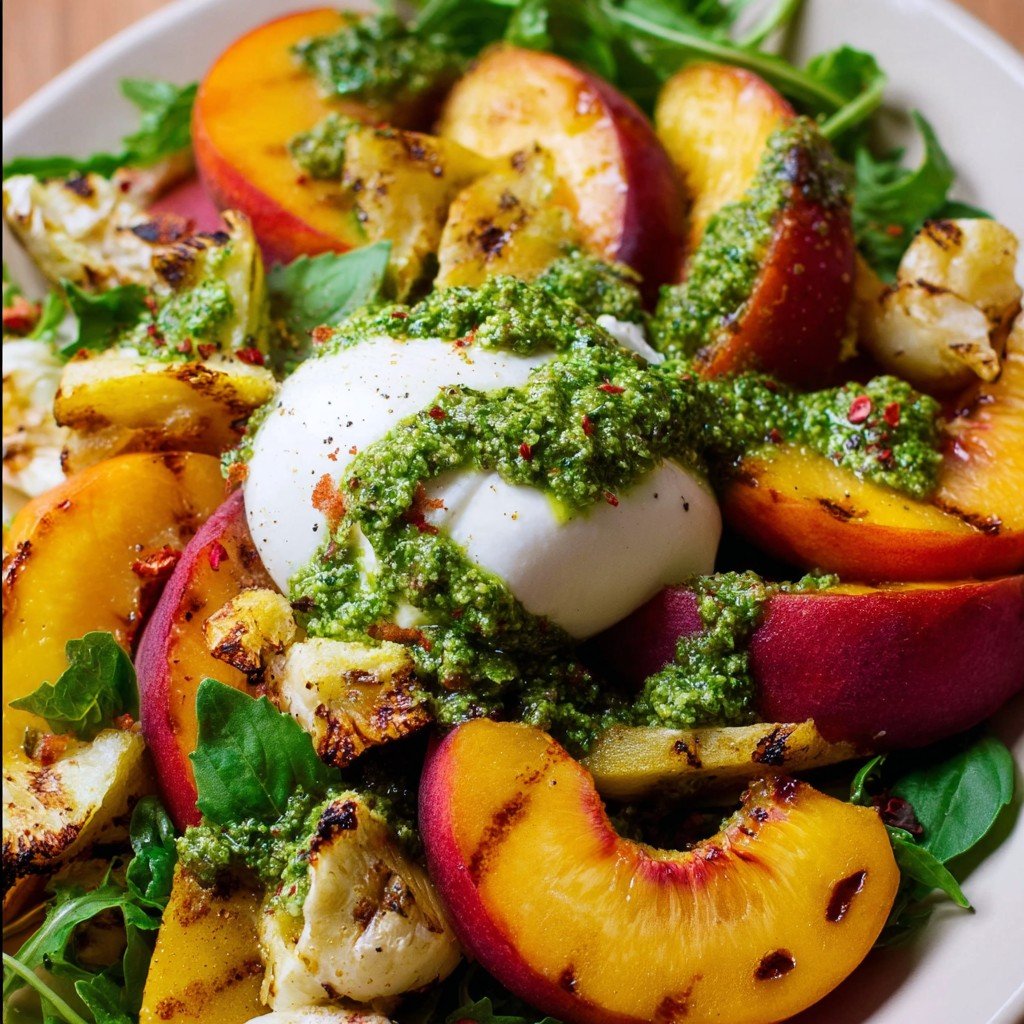
- Grab your prettiest plate (not necessary, but it impresses guests). Scatter arugula, arrange roasted peaches, tear up those lovely burrata blobs, and drop them over everything.
- Spoon over pesto. As much or as little as your soul craves. Then drizzle a bit of honey if you’re into the sweet-salty thing. Finish with lemon zest and maybe a final crack of pepper.
- Take a step back and admire. (This is my sneak-a-taste moment. Quality control, obviously!)
A Few Notes, Straight from the Firing Line
- The honey is totally optional, but once I forgot it and my friend said something was “missing that sparkle.” Go figure.
- If you make extra pesto, it’s brilliant on pasta the next day. Actually, I kinda think it gets better after sitting overnight anyway.
- Try not to over-crowd your roasting pan, or the peaches steam instead of caramelize. Unless you like ‘em soft and squishy (no judgment, mate!).

Variations From My Kitchen Experiments (And One Misstep)
- Tried making it with grilled peaches instead of roasted—very, very good, especially if you’ve got the BBQ out.
- Added a big pinch of chili flakes to the pesto one time, and it was spicy, but wow, even my toddler ate it. Not too much though!
- Once tossed in grilled halloumi because I was out of burrata. Tasted nice but, well, not as creamy. Wouldn’t do again unless desperate.
On Equipment: Don’t Sweat Perfection
You really do want a decent blender or food processor for the pesto. But hey, if you don’t have one, a sharp knife and some elbow grease with a cutting board will sort you out; it’s chunkier but in a rustic, “I totally meant to do that” way. I did just that at a friend’s picnic once, and nobody complained.

Real Talk on Storage
Officially, you can cover it up and keep it in the fridge for a day or two. But honestly, in my house it never lasts more than a day! If you make the pesto separately, it’s happiest for about a week (just stir it if it separates). The salad itself gets a bit sad and wilty after a night, but that doesn’t stop my midnight snacking.
My Favourite Way To Serve It (and An Odd Tradition)
We usually eat this as a starter before throwing something on the BBQ, but it’s also lovely as a light lunch with some good bread for scooping—sourdough is my current obsession, but a baguette or even a toasted English muffin once did the trick. For some reason, my mum insists we eat it outside if it’s above 60F, “for the vibe.” Gotta love her.
Pro Tips (Ahem, Lessons Learned The Hard Way)
- Don’t rush roasting the peaches—once I cranked up the oven, got distracted on Instagram, and returned to peach jerky. The smell lingered for days, not in a good way.
- Pesto’s too thick? More oil, or even a splash of water, works. I used to just keep blending but it never helps.
- Always taste before serving. I once mixed up salt and sugar. No one talks about it, but I relive it every time.
Your Questions (And My Sometimes Rambly Replies)
- Can I use canned peaches?
- Honestly, I’d say fresh is way better, but in the middle of winter, sure—just pat them dry and roast a little less.
- How long does homemade pesto last?
- About a week in the fridge, covered. I sometimes top it with a splash of olive oil so it doesn’t go brown. But it rarely sits that long.
- Is there a nut-free option?
- Yup—swap in sunflower or pumpkin seeds. Or skip entirely; it’s still lovely, just a bit less rich.
- What if I can’t find burrata?
- Mozzarella works okay, like I said. Cream cheese, not so much. And feta… eh, I tried once, wouldn’t recommend it. If you’re desperate, just add extra arugula and sneak in more pesto.
Well, now I’m hungry again just thinking about it. Anyway, hope you give this little dish a go—maybe you’ll end up with your own house joke or, at the very least, fewer mysterious peaches haunting your fridge.
Ingredients
- 3 ripe peaches, pitted and sliced
- 2 tablespoons olive oil
- 1/4 teaspoon sea salt
- 5 oz mixed salad greens
- 8 oz burrata cheese
- 1/3 cup fresh basil pesto
- 1/4 cup toasted pine nuts
- Freshly ground black pepper, to taste
Instructions
-
1Preheat the oven to 400°F (200°C). Line a baking sheet with parchment paper.
-
2Toss sliced peaches with 1 tablespoon olive oil and sea salt. Arrange them on the prepared baking sheet.
-
3Roast peaches in the oven for 12-15 minutes, or until soft and slightly caramelized. Remove from oven and let cool slightly.
-
4In a large bowl, toss mixed salad greens with the remaining olive oil. Arrange on a serving platter.
-
5Place roasted peaches and torn pieces of burrata over the greens. Drizzle with basil pesto and sprinkle with toasted pine nuts.
-
6Season with freshly ground black pepper and serve immediately.
Approximate Information for One Serving
Nutrition Disclaimers
Number of total servings shown is approximate. Actual number of servings will depend on your preferred portion sizes.
Nutritional values shown are general guidelines and reflect information for 1 serving using the ingredients listed, not including any optional ingredients. Actual macros may vary slightly depending on specific brands and types of ingredients used.
To determine the weight of one serving, prepare the recipe as instructed. Weigh the finished recipe, then divide the weight of the finished recipe (not including the weight of the container the food is in) by the desired number of servings. Result will be the weight of one serving.
Did you make this recipe?
Please consider Pinning it!!