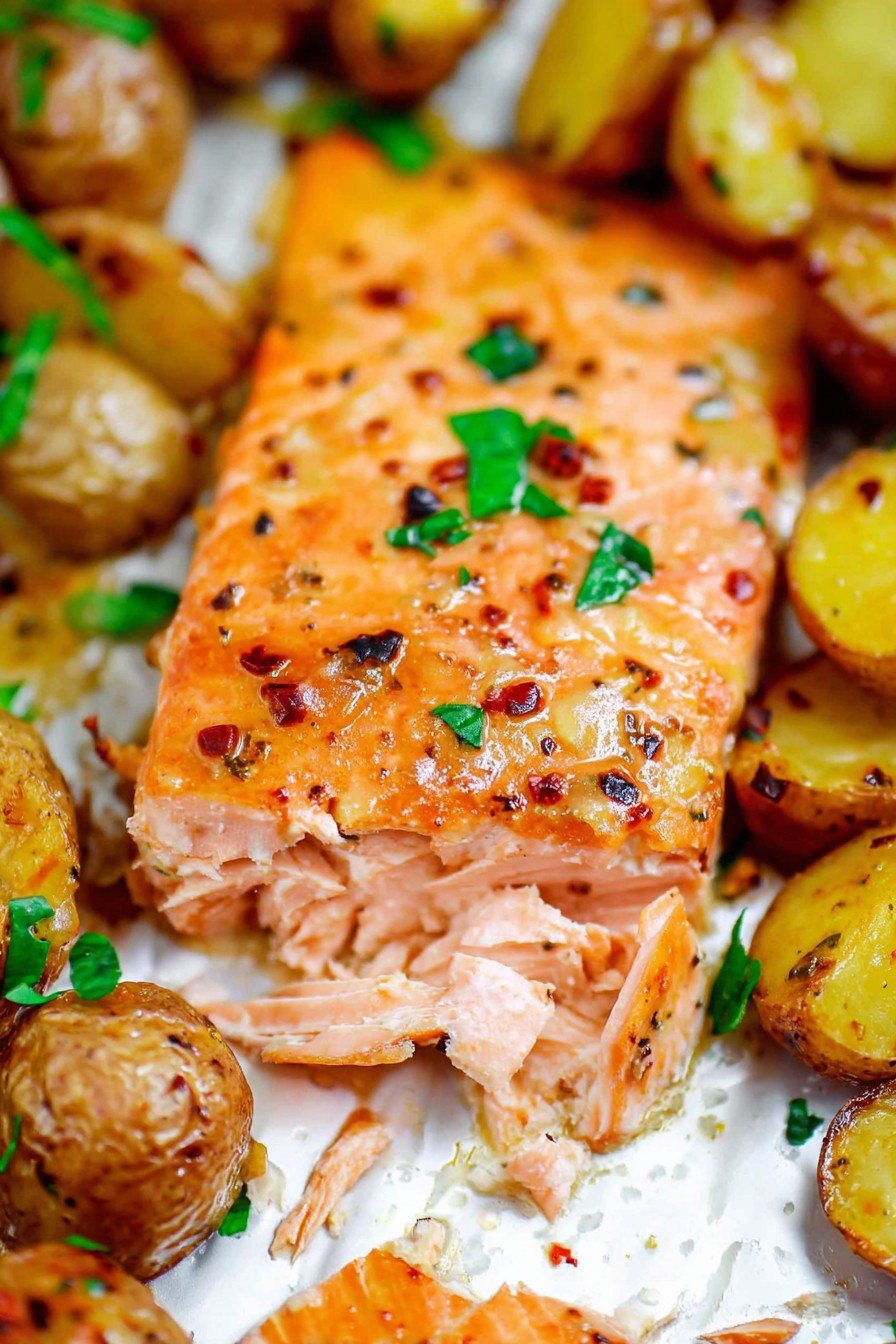
Want to Know Why I Love Sheet Pan Salmon?
This dish is basically my weeknight lifesaver. First time I made sheet pan lemon Dijon baked salmon and potatoes, I was running late for… well, everything. There were two potatoes looking at me from the counter (one a bit more wrinkly than the other). So, I thought, let’s toss it all on a pan and see how it goes. Maybe you’ve been there too? If you don’t laugh in your kitchen now and then, I honestly don’t know how you cope. Anyway, the result was so tasty, my younger son demanded, “Next time, double the potatoes!” I admit, he’s not wrong.
Why This is Always a Winner in Our House
I make this whenever I need dinner to practically cook itself, like when it’s a Tuesday but feels like a Friday (you know what I mean). My family goes crazy for this because the salmon gets all perky and bright from lemon, plus the humble potato slices get crispy edges without me standing guard at the stove. And you just use one pan (I can almost hear the dishwasher sigh in relief).
Oh, and if you hate washing up—this has your name written all over it. Sometimes, I’ve had to remind people that potatoes actually take longer than salmon to cook, which used to irk me, but I finally figured out a workaround. No more overcooked fish! Actually, I find it works better if you give potatoes a quick head start (see, learned from mistakes!).
Here’s What You’ll Need (Give or Take)
- 4 salmon fillets (around 170g/6oz each, skin on or off, up to you honestly)
- 4 medium potatoes (Yukon Gold is my go-to, but any waxy potato works—my grandma swore by Desiree, but I don’t notice a big difference)
- 3 tbsp olive oil (in a bind, I’ve used melted butter or even sunflower oil)
- 1 big lemon (you’ll need the zest and juice; in a pinch, bottled juice suffices but it ain’t quite the same)
- 2 tbsp Dijon mustard (I sometimes sneak in grainy mustard if I’m feeling fancy—but regular yellow is fine if it’s what you have)
- 2-3 cloves of garlic, minced (or a generous squeeze from the jar—judge away)
- 1 tsp dried thyme (I grab rosemary if that’s closer. Fresh herbs work, but don’t run out just to buy them)
- Salt and pepper, as you fancy it
- Optional: a little parsley or dill for sprinkling later (or skip entirely—I’ve forgotten and lived to tell the tale)
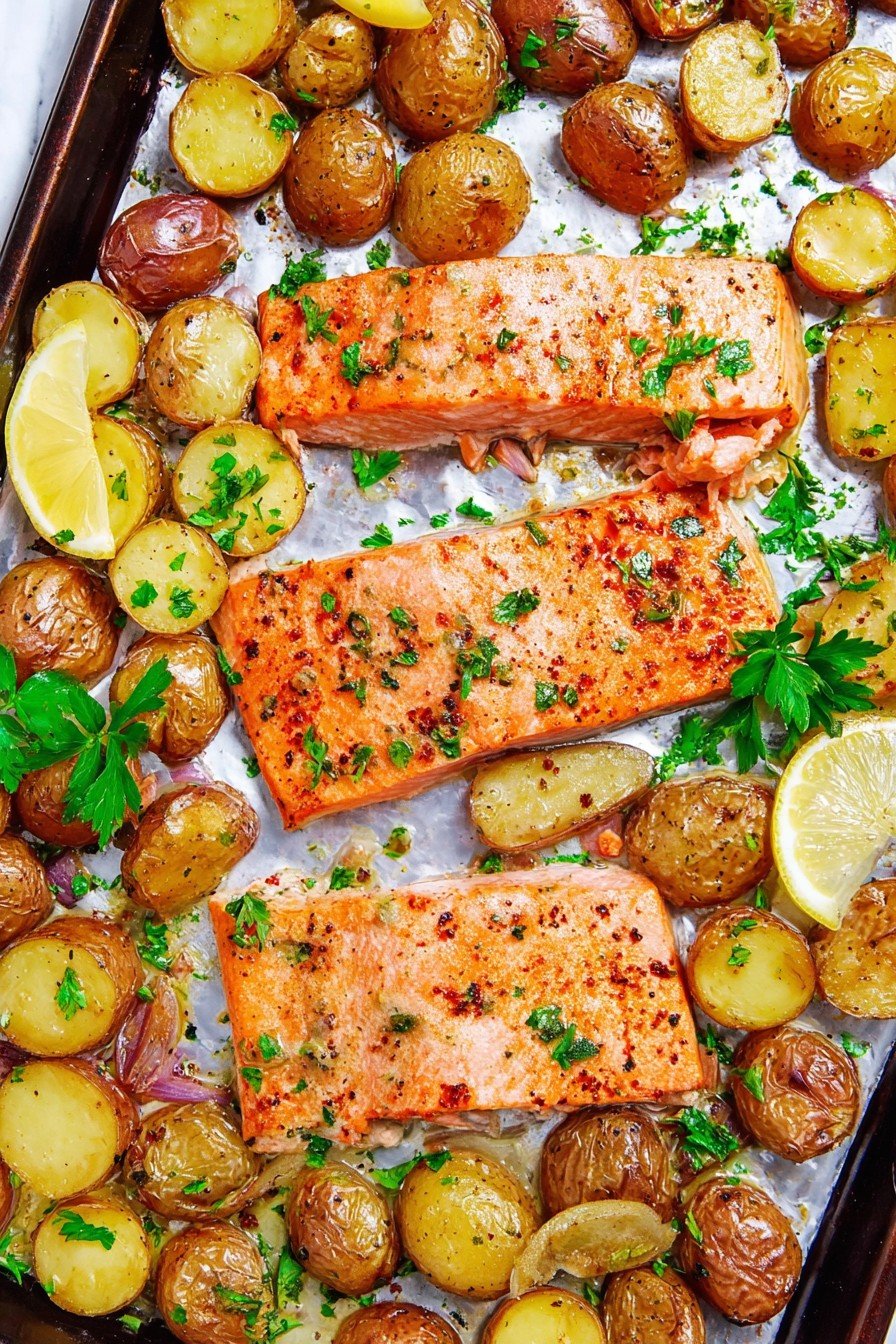
How I Actually Cook This, Step by Step
- Heat your oven to 220°C/425°F. Not quite as hot as pizza, but you want a bit of punch.
- Slice your potatoes into 1⁄4” rounds, not too thick. I sometimes use a mandoline, but my old chef’s knife works fine—even if the slices are a bit, um, characterful.
- Toss potatoes in a mixing bowl with half the olive oil, a solid pinch of salt, a bit of pepper, and half the thyme. Spread ’em over a roomy sheet pan, giving them some real estate—not stacked. Roast for 15-18 minutes, until they start to look a bit golden and just fork-tender. (Sometimes, I snack on one here. Quality control!)
- Meanwhile, in a small bowl, whisk up your lemon zest, juice, Dijon, remaining olive oil, garlic, and the other half of the thyme. It should smell amazing—like “someone’s cooking something nice next door” territory.
- Pull out the hot pan; push the potatoes to the sides to clear space for the salmon fillets. Lay the fish skin-side down, and give each a friendly brush with that zippy lemon-Dijon mix. Drizzle what’s left on the potatoes.
- Bake everything together for another 10-12 minutes. Salmon should be flakey but not dry—don’t be shy about poking it to double check. Potatoes get even crispier by now. If you like things extra golden, chuck the broiler (grill) on for a minute or two at the end. Watch it! Don’t wander off (I burned things once thanks to a phone call from Mum).
- Sprinkle over parsley, more lemon, or whatever you’ve got a spare second for. Serve straight from the pan—honestly, why bother dirtying a platter?
A Few Notes You’ll Pick Up on Your Own (Or Maybe Not)
- If you overdo the Dijon, the family might mutiny. Been there, done that, had leftovers for lunch. Toned it down next time.
- Sometimes the potatoes stick a bit. Eh. Parchment paper can help, unless you forget to use it (like I sometimes do!).
- Actually, if your potatoes are super fresh, they cook quicker. Mine once turned mushy because I didn’t check, but the crispy bits still saved the day.
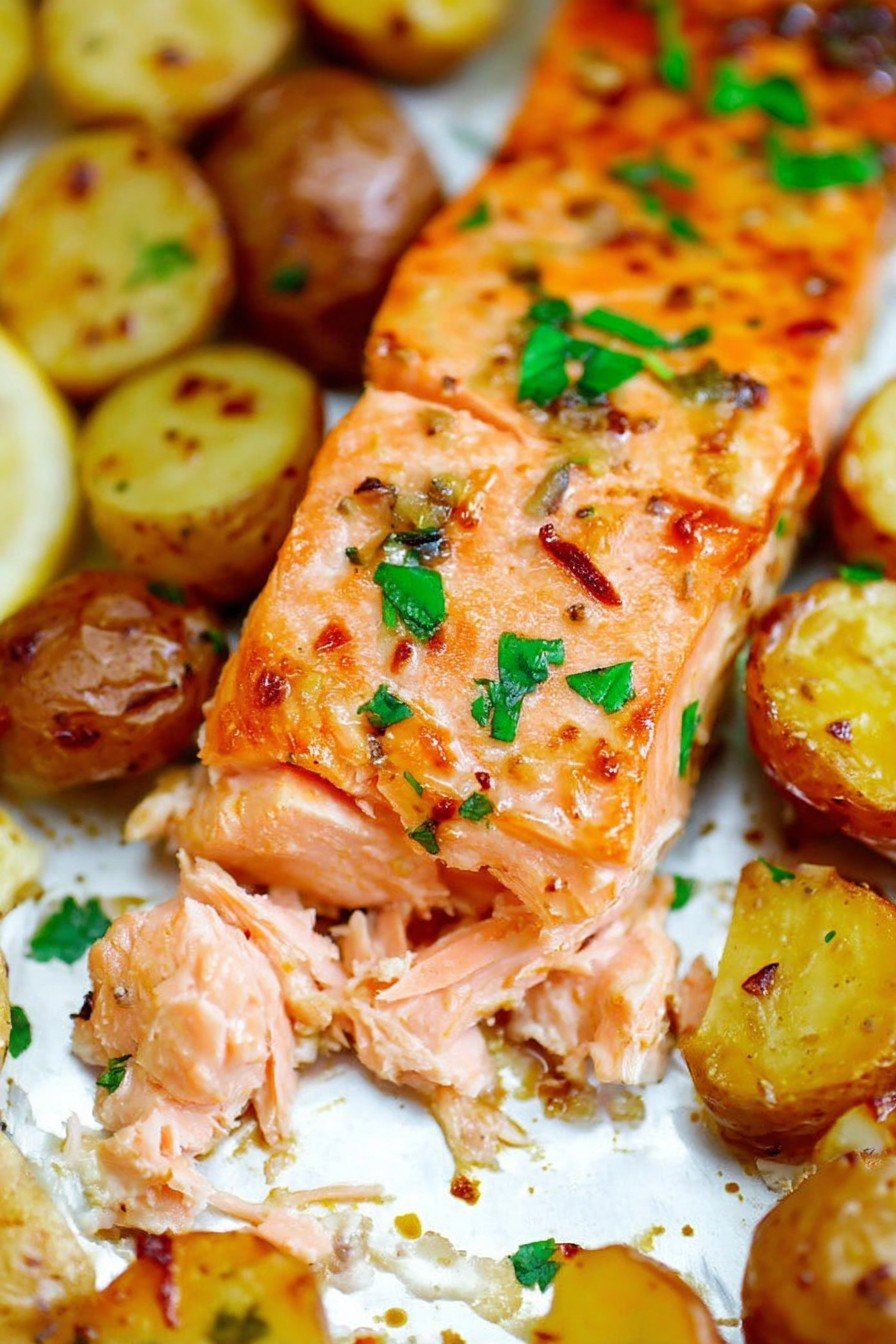
Stuff I’ve Tried, for Better or Worse
- Tossing in sliced red onion or bell pepper, just on a whim. It worked. Added nice color and sweetness—totally recommend.
- Swapped out salmon for cod; goes okay, a bit less buttery but still passes muster. Trout is good too, if you happen to have it.
- I tried sweet potatoes once. Meh. Maybe I sliced them too thick, but the timing was off—don’t say I didn’t warn you.
If You Don’t Have Fancy Equipment
You obviously need some kind of large baking sheet or roasting tin—anything rimmed to stop olive oil from escaping and smoking up the oven. But honestly, you could MacGyver with two smaller pans, or even use a casserole dish in a pinch. Just watch the timing; things might brown less but will still get delish. For whisking the sauce, a fork is fine (I’ve never understood whisks with fifteen wires anyway).
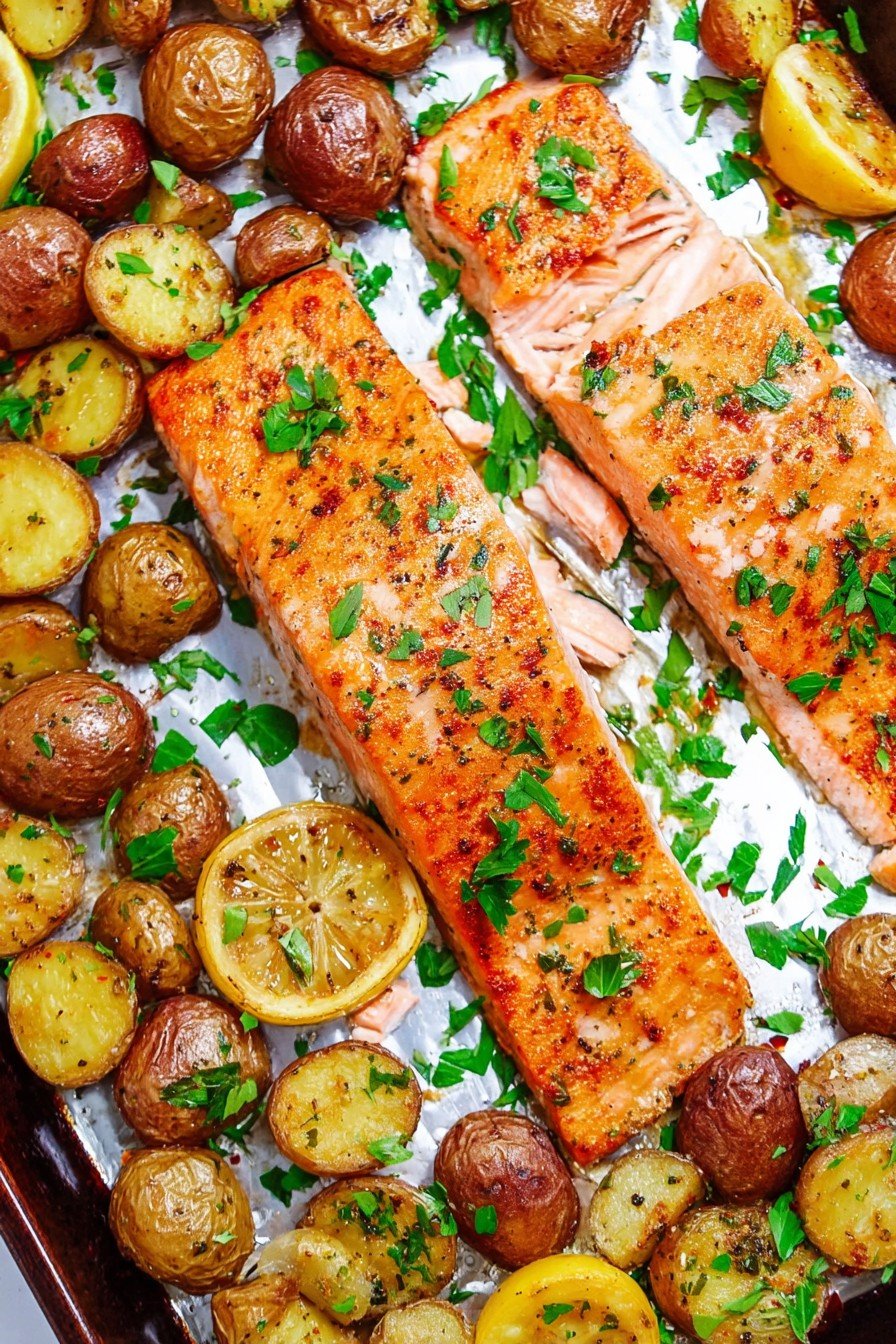
How to Store Leftovers—If That Ever Happens
Just pop whatever’s left into a sealed container in the fridge. Should keep happily for up to 2 days, though honestly, in my house it never lasts more than a day! If you’re reheating, I go for the oven over the microwave (crisps the potatoes again), but I won’t judge. Cold salmon is also weirdly great in salads. If you want more tips about food storage, Serious Eats has a guide I use for trickier stuff.
How I Like to Serve It (Your Mileage May Vary)
Personally, I just plonk the sheet pan in the middle of the table—saves on washing up! Sometimes we’ll add a side salad (arugula and cherry tomatoes, just olive oil and balsamic). My friend Laura swears by a glass of crisp Sauvignon Blanc with it. Kids will probably beg for ketchup—let them. It’s also surprisingly good next to some leftover steamed green beans if you’ve got those lurking about.
Hard-Learned Lessons (AKA Pro Tips)
- Don’t try to rush the potato pre-roast, or you’ll get crunchy salmon on raw potatoes. I made that mistake and my husband tried to be nice but, well, the faces said everything.
- Squeezing lemon juice over too soon? The acid can start to cook the salmon. Learned that one the (sort of) hard way. Wait till it’s on the pan.
Can I Answer These Real Questions?
- Can I use frozen salmon? Sure thing! Just thaw and pat dry first. If you’re in a mad rush (who isn’t?), you can cook from frozen, just give it a few extra minutes and expect a bit more liquid on the pan. Or check this salmon prep how-to from Bon Appétit—it’s a lifesaver.
- My potatoes aren’t done when the fish is—what now? Classic! Just scoop off the salmon when it’s ready, keep it warm under foil, and let the potatoes go for a few more mins. It’s not cheating; it’s dinner.
- What can I use instead of Dijon? I once tried spicy brown mustard in desperation—it worked fine, though tasted a touch punchier. Honey mustard makes it zingier (maybe too sweet for some?).
- Do I have to peel the potatoes? Nah. I’d only peel if the skin is thick and rough. Otherwise, I leave ‘em for extra flavor and (so they say) nutrients.
- Is parchment necessary? Not really. It just makes cleanup easier—when I remember, anyway.
- I’m out of thyme—what’s close enough? I’ve used Italian seasoning or even dried oregano. Nobody complained (or noticed, for that matter!).
That about covers it! Actually, before I forget, if you’re looking for another sheet pan trick, Salt & Lavender has one I borrowed inspiration from ages ago. Just keep cooking—and don’t be afraid to wing it now and then. That’s where the real kitchen magic happens, honestly.
Ingredients
- 4 salmon fillets (about 5 oz each)
- 1 1/2 pounds baby potatoes, halved
- 2 tablespoons olive oil
- 1 tablespoon Dijon mustard
- 2 cloves garlic, minced
- 1 lemon, zested and juiced
- 1 teaspoon dried thyme
- Salt and freshly ground black pepper, to taste
- 2 tablespoons fresh parsley, chopped
Instructions
-
1Preheat the oven to 425°F (220°C) and line a large sheet pan with parchment paper.
-
2In a small bowl, whisk together olive oil, Dijon mustard, lemon juice, lemon zest, minced garlic, dried thyme, salt, and pepper.
-
3Toss potato halves with half of the marinade and spread them out in a single layer on the sheet pan. Roast for 15 minutes.
-
4Remove the pan from the oven, move the potatoes to one side, and place salmon fillets skin-side down on the pan. Spoon remaining marinade over the salmon.
-
5Return to the oven and bake for 10-12 minutes, until salmon is just cooked through and potatoes are golden and tender.
-
6Sprinkle with chopped parsley and serve immediately with lemon wedges, if desired.
Approximate Information for One Serving
Nutrition Disclaimers
Number of total servings shown is approximate. Actual number of servings will depend on your preferred portion sizes.
Nutritional values shown are general guidelines and reflect information for 1 serving using the ingredients listed, not including any optional ingredients. Actual macros may vary slightly depending on specific brands and types of ingredients used.
To determine the weight of one serving, prepare the recipe as instructed. Weigh the finished recipe, then divide the weight of the finished recipe (not including the weight of the container the food is in) by the desired number of servings. Result will be the weight of one serving.
Did you make this recipe?
Please consider Pinning it!!