Okay, let me set the scene—it’s Thursday night, it’s been raining all afternoon (my socks are still a bit damp actually), and all I want is something warm and easy that tastes, well, like you put just a touch more effort in than you actually did. Creamy Tarragon Chicken and Potatoes is one of my go-to fallbacks; honestly, I’ve probably made it more times than I’m willing to admit. My cousin Jamie once called me ‘the Queen of Saucy Poultry’ after I served this at a family thing—I’m still not sure if it was a compliment, but I’ll take it! Anyway, there’s just something about tarragon and chicken together, right?
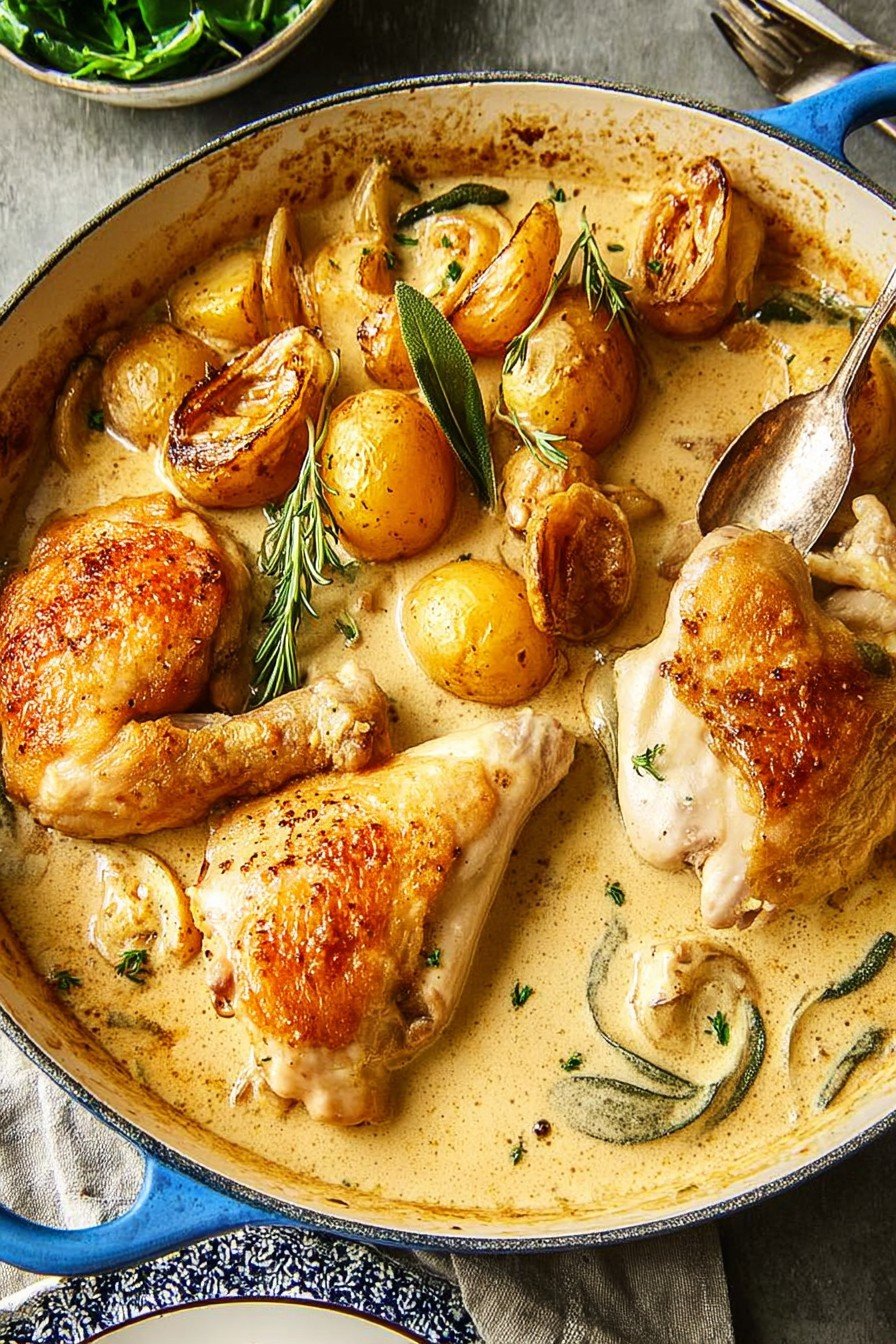
Why You’ll Love This (Or: Reasons My Family Won’t Let Me Skip It)
I make this when I want the house to smell—how do I put this—like someone’s been cooking for hours (except I usually start at 6 pm). My family goes a bit wild for it because the potatoes get all tender and the sauce feels fancy even if, let’s be honest, I can barely locate a whisk half the time. Plus, it’s one of those ‘sneak a spoonful straight form the pan’ situations, especially if nobody is looking. The only thing that used to frustrate me: cutting up raw chicken when it’s still kind of cold. But I’ve started letting it sit out on the counter for like 10 minutes first—problem solved.
Here’s What You’ll Need (Substations Welcome!)
- 4 chicken thighs, skin-on & bone-in (I sometimes use boneless thighs if they’re on sale. Chicken breasts work but tend to be a tad less juicy if you ask me.)
- 1 pound baby potatoes, halved (Or use regular potatoes and just chop them into chunky bits. Sweet potatoes? Haven’t tried, but maybe!)
- 2 tbsp olive oil (Butter is fine but you might want less salt if you go that route)
- 3/4 cup heavy cream (I’ve swapped in half-and-half in a pinch—still good, just a bit thinner)
- 1/2 cup chicken broth (I use those little cubes plus hot water. Gran’s rule: any broth works.)
- 2 tbsp fresh tarragon, chopped (Honestly, dried works too, but I just use about half as much. Occasionally I get feisty and sneak in a little parsley.)
- 3 garlic cloves, minced (More or less if you want. Sometimes I get lazy and use that jarred stuff—no judgment)
- 1 small onion, diced (Red onion also works great—it’s what I usually have hanging out in the pantry)
- 1 tsp Dijon mustard (Optional but it gives the sauce a tiny kick. Whole grain mustard works if that’s what you have.)
- Salt and black pepper to taste (I never measure, just whatever feels right in the moment)
How to Pull This Off Without Losing Your Mind
- Preheat your oven to 400F (200C). Or thereabouts. My oven runs a bit hot so I usually go to 390F.
- Pat your chicken thighs dry—this step’s more important than I thought; actually, they brown way better. Season with salt and pepper all over.
- Heat the olive oil in a big ovenproof skillet (think cast iron or anything that can go straight into the oven—it doesn’t need to be fancy). Place chicken thighs skin-side down and sear for about 5-6 minutes, till the skin gets nice and golden-brown. Don’t move them around too much or the skin will stay glued to the pan (been there).
- Flip the chicken over (tongs are handy here, but a spatula and some luck works in a pinch), and toss in the halved potatoes around the chicken. Let everything sizzle for another 3-4 minutes, just to start getting color on the spuds.
- Remove the chicken and potatoes to a plate—but leave as much of that glorious fat in the pan as you can (seriously, it’s flavor central).
- Tip in the diced onion and cook for about 3 minutes, stirring, till it goes soft. Garlic goes in next; give it another minute (but don’t let it burn, unless ‘garlic surprise’ is your thing).
- Pour in the chicken broth and scrape the bottom a bit—get all those crispy bits loose. Lower the heat if things look a little frazzled.
- Add the heavy cream, mustard, and most of the tarragon (save a pinch for later if you remember). Swirl together. Bring to a simmer; it looks weirdly yellowish at this moment but just trust the process.
- Return the chicken and potatoes (plus any juices) to the pan, nestling them into the sauce skin-side up. This is where I usually sneak a little taste. Sometimes more than a little, honestly.
- Slide the pan into the oven—don’t forget the oven mitt, ask me how I know. Bake (uncovered) for about 30-35 minutes, till the potatoes are fork-tender and the chicken is nice and cooked through.
- Let it rest 5 minutes out of the oven so the sauce thickens a smidge. Then sprinkle the rest of the tarragon over top. Serve it piping hot, straight from the pan if you can’t be bothered to plate it up.
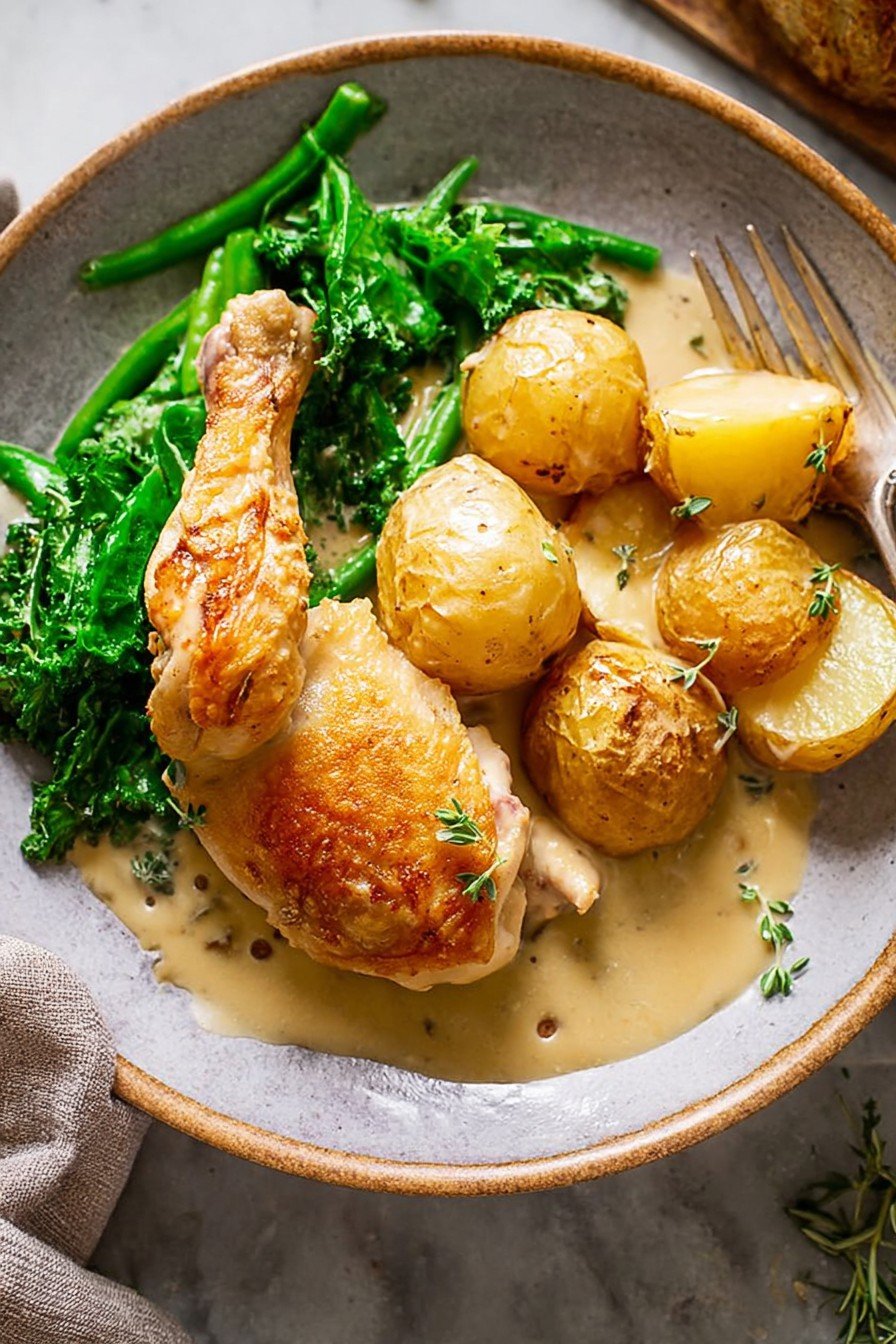
Some Notes (Aka Things I’ve Learned the Hard Way)
- If you use dried tarragon, start with less—you can always add more but you can’t take it out. (Learned that the herby way.)
- Sauce will thicken as it cools. I always think I’ve messed it up until it sits for five minutes.
- If you don’t have an ovenproof skillet, just transfer everything into any baking dish after making the sauce on the stovetop. One time I used my old lasagna pan—worked a treat.
- I think it actually tastes better the next day, for reasons I don’t fully understand.
If You Want to Mix It Up (Or: What Worked and What Didn’t)
- Swapped in mushrooms instead of potatoes—delicious! But definitely left my daughter picking them out (she calls them ‘nature’s sponges’).
- Tried adding peas at the end, just to be clever. They turned out a bit mushy—in hindsight, probably best to serve them separately.
- Used pork chops once (ran out of chicken, what can I say)—the sauce still worked but the potatoes needed longer. Not my finest hour, but edible!
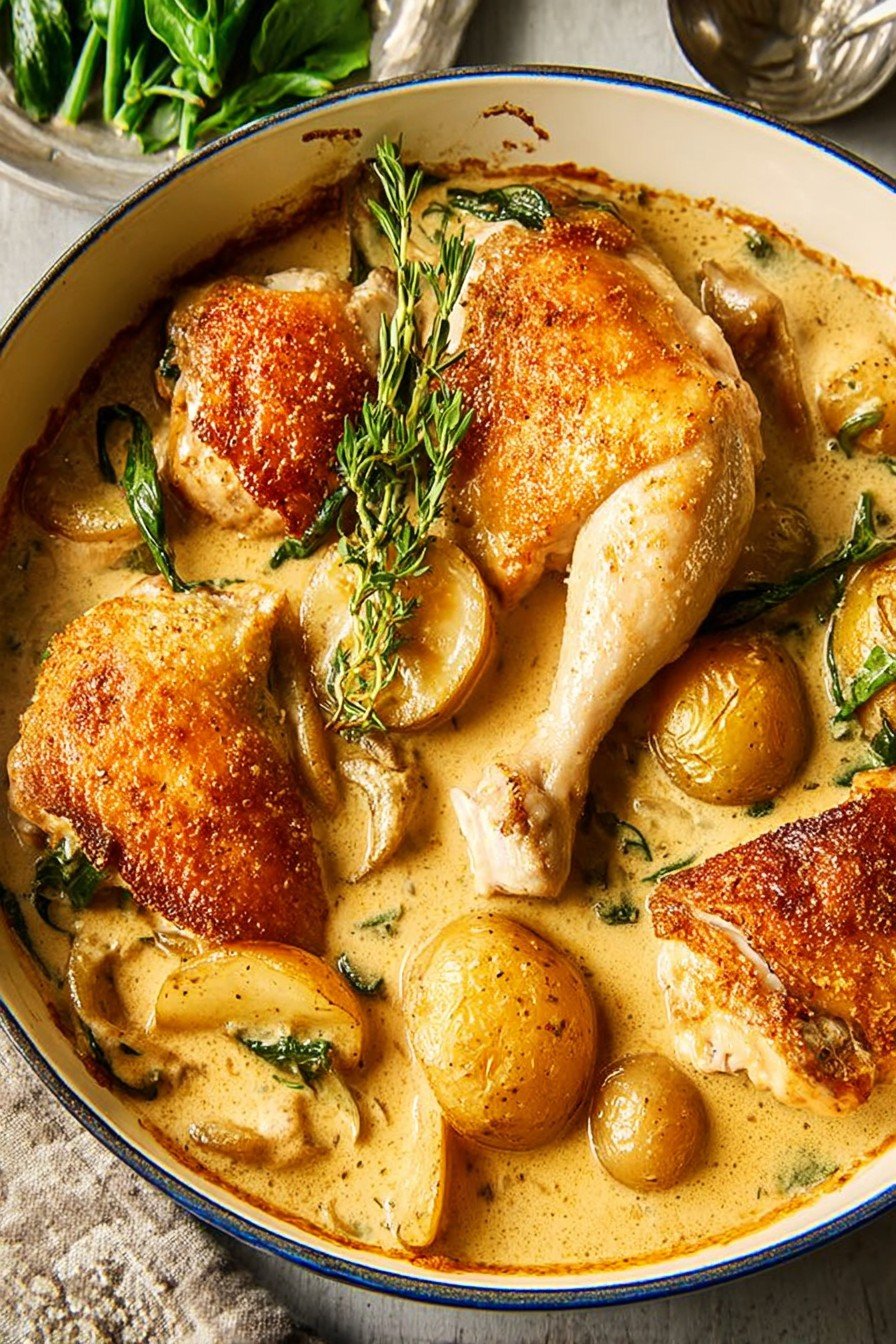
About Equipment (And a Rant About Pans)
I use my ancient cast-iron skillet for this, but if you don’t have one, honestly, just use a big saucepan and transfer to any old tray or dish for the oven. Cast iron is ace for browning but not worth buying just for one recipe (unless you really want to join the Iron Skillet Appreciation Society).
Storing Leftovers (If That’s Ever an Option)
It keeps best in an airtight container in the fridge for up to two days—though honestly, in my house it never lasts more than a day, maybe less if there’s late-night fridge-raiding. The sauce sometimes separates a bit when reheated but a good stir usually pulls it right back together. Oddly enough, I think the flavor gets more “together” overnight, if that makes any sense.
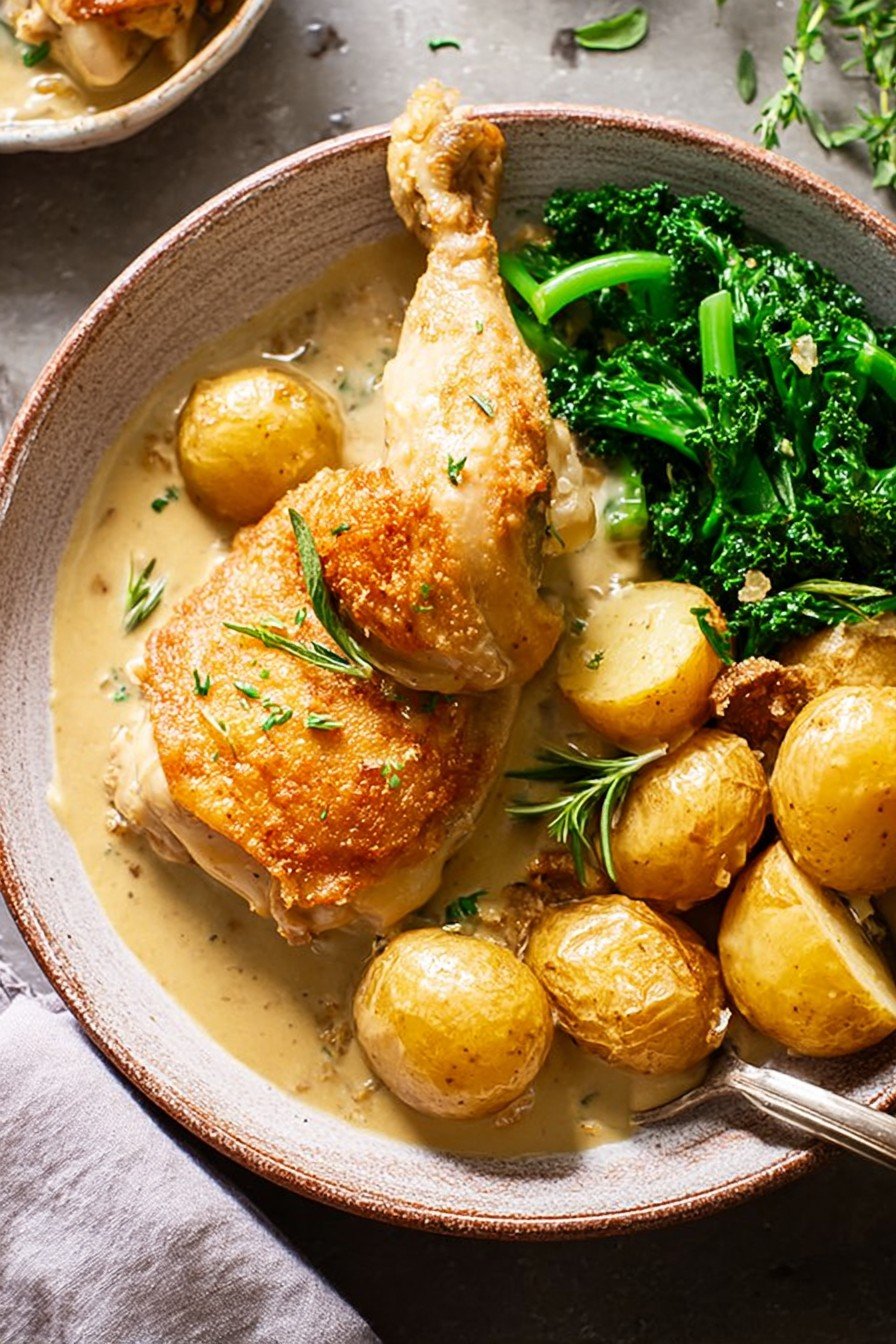
Serving Suggestions (Because Sides Are Half the Fun)
We usually spoon this straight over steamed green beans or sometimes (for special occasions, or if I’m feeling particularly French) with a crisp salad. My son insists it’s best mopped up with crusty bread—who am I to argue?
Pro Tips I Learned the Messy Way
- I once skipped browning the chicken to save time; don’t do it. Missing that step means no crispy skin and the sauce is less flavorful—live and learn.
- If the sauce looks thin coming out of the oven, resist chucking in flour. Give it a few extra minutes resting—usually thickens up as it cools. Seriously, I’ve ruined more than one pan by over-fiddling.
- Don’t stress if the potatoes get a little golden on top—a tiny bit of crust just adds character.
FAQ From Friends and Curious Cooks
- Can I make this ahead of time?
- Yes! Actually, I tend to think it tastes better on day two, but if you do prep early, just reheat gently so the sauce doesn’t split. Trust me, I zapped it in the microwave once—regretted it (lumpy sauce city).
- Is there a dairy-free version?
- Sort of. I’ve tried coconut cream instead of the heavy cream—not exactly the same vibe, but honestly we didn’t mind the faint coconut twist! If you do go that way, skip the mustard maybe, unless you’re braver than me…
- What if I don’t like tarragon?
- I get it. The flavor isn’t for everyone. You could try thyme instead (bit of a different feel), or even a mix of parsley and chives; it won’t be ‘tarragon chicken’ but it’ll still be something my granny would eat.
- Can I freeze leftovers?
- Well, yes, but potatoes get a tad weird in texture after a freeze-thaw adventure—kinda grainy. Not the end of the world, but just so you know what you’re in for!
- Do I have to peel the potatoes?
- Nope! I never do (mostly because I can’t be bothered). Just give ‘em a good scrub and chop, the skins taste great.
Anyway, whether it’s for a Sunday dinner or, you know, a Wednesday when you wish it was Sunday—give this Creamy Tarragon Chicken and Potatoes a whirl. And if you end up eating straight from the pan over the sink, just know you’re not alone. Cheers!
Ingredients
- 4 chicken thighs, skin-on & bone-in (I sometimes use boneless thighs if they’re on sale. Chicken breasts work but tend to be a tad less juicy if you ask me.)
- 1 pound baby potatoes, halved (Or use regular potatoes and just chop them into chunky bits. Sweet potatoes? Haven’t tried, but maybe!)
- 2 tbsp olive oil (Butter is fine but you might want less salt if you go that route)
- 3/4 cup heavy cream (I’ve swapped in half-and-half in a pinch—still good, just a bit thinner)
- 1/2 cup chicken broth (I use those little cubes plus hot water. Gran’s rule: any broth works.)
- 2 tbsp fresh tarragon, chopped (Honestly, dried works too, but I just use about half as much. Occasionally I get feisty and sneak in a little parsley.)
- 3 garlic cloves, minced (More or less if you want. Sometimes I get lazy and use that jarred stuff—no judgment)
- 1 small onion, diced (Red onion also works great—it’s what I usually have hanging out in the pantry)
- 1 tsp Dijon mustard (Optional but it gives the sauce a tiny kick. Whole grain mustard works if that’s what you have.)
- Salt and black pepper to taste (I never measure, just whatever feels right in the moment)
Instructions
-
1Preheat your oven to 400F (200C). Or thereabouts. My oven runs a bit hot so I usually go to 390F.
-
2Pat your chicken thighs dry—this step’s more important than I thought; actually, they brown way better. Season with salt and pepper all over.
-
3Heat the olive oil in a big ovenproof skillet (think cast iron or anything that can go straight into the oven—it doesn’t need to be fancy). Place chicken thighs skin-side down and sear for about 5-6 minutes, till the skin gets nice and golden-brown. Don’t move them around too much or the skin will stay glued to the pan (been there).
-
4Flip the chicken over (tongs are handy here, but a spatula and some luck works in a pinch), and toss in the halved potatoes around the chicken. Let everything sizzle for another 3-4 minutes, just to start getting color on the spuds.
-
5Remove the chicken and potatoes to a plate—but leave as much of that glorious fat in the pan as you can (seriously, it’s flavor central).
-
6Tip in the diced onion and cook for about 3 minutes, stirring, till it goes soft. Garlic goes in next; give it another minute (but don’t let it burn, unless ‘garlic surprise’ is your thing).
-
7Pour in the chicken broth and scrape the bottom a bit—get all those crispy bits loose. Lower the heat if things look a little frazzled.
-
8Add the heavy cream, mustard, and most of the tarragon (save a pinch for later if you remember). Swirl together. Bring to a simmer; it looks weirdly yellowish at this moment but just trust the process.
-
9Return the chicken and potatoes (plus any juices) to the pan, nestling them into the sauce skin-side up. This is where I usually sneak a little taste. Sometimes more than a little, honestly.
-
10Slide the pan into the oven—don’t forget the oven mitt, ask me how I know. Bake (uncovered) for about 30-35 minutes, till the potatoes are fork-tender and the chicken is nice and cooked through.
-
11Let it rest 5 minutes out of the oven so the sauce thickens a smidge. Then sprinkle the rest of the tarragon over top. Serve it piping hot, straight from the pan if you can’t be bothered to plate it up.
Approximate Information for One Serving
Nutrition Disclaimers
Number of total servings shown is approximate. Actual number of servings will depend on your preferred portion sizes.
Nutritional values shown are general guidelines and reflect information for 1 serving using the ingredients listed, not including any optional ingredients. Actual macros may vary slightly depending on specific brands and types of ingredients used.
To determine the weight of one serving, prepare the recipe as instructed. Weigh the finished recipe, then divide the weight of the finished recipe (not including the weight of the container the food is in) by the desired number of servings. Result will be the weight of one serving.
Did you make this recipe?
Please consider Pinning it!