Let Me Tell You About My Falafel Bowl Habit…
You know how some evenings you stare into the fridge like it’s going to whisper dinner ideas back at you? That’s me most Tuesdays. Anyway—one night, I had a leftover bundle of parsley, a (slightly) tired can of chickpeas, and the haunting memory of a street-food stall in Athens where I ate my weight in falafel. Thus, my Mediterranean Falafel Bowl was born. I’m not gonna lie—my first attempt tasted a bit like cardboard, but eventually I got it together. Now it’s in heavy rotation; heck, sometimes I crave it for breakfast (don’t judge). By the way, making falafel at home is way easier than I thought. I even managed not to burn anything, which was a first.
Why This Bowl Kinda Rules (At Least, In My Kitchen)
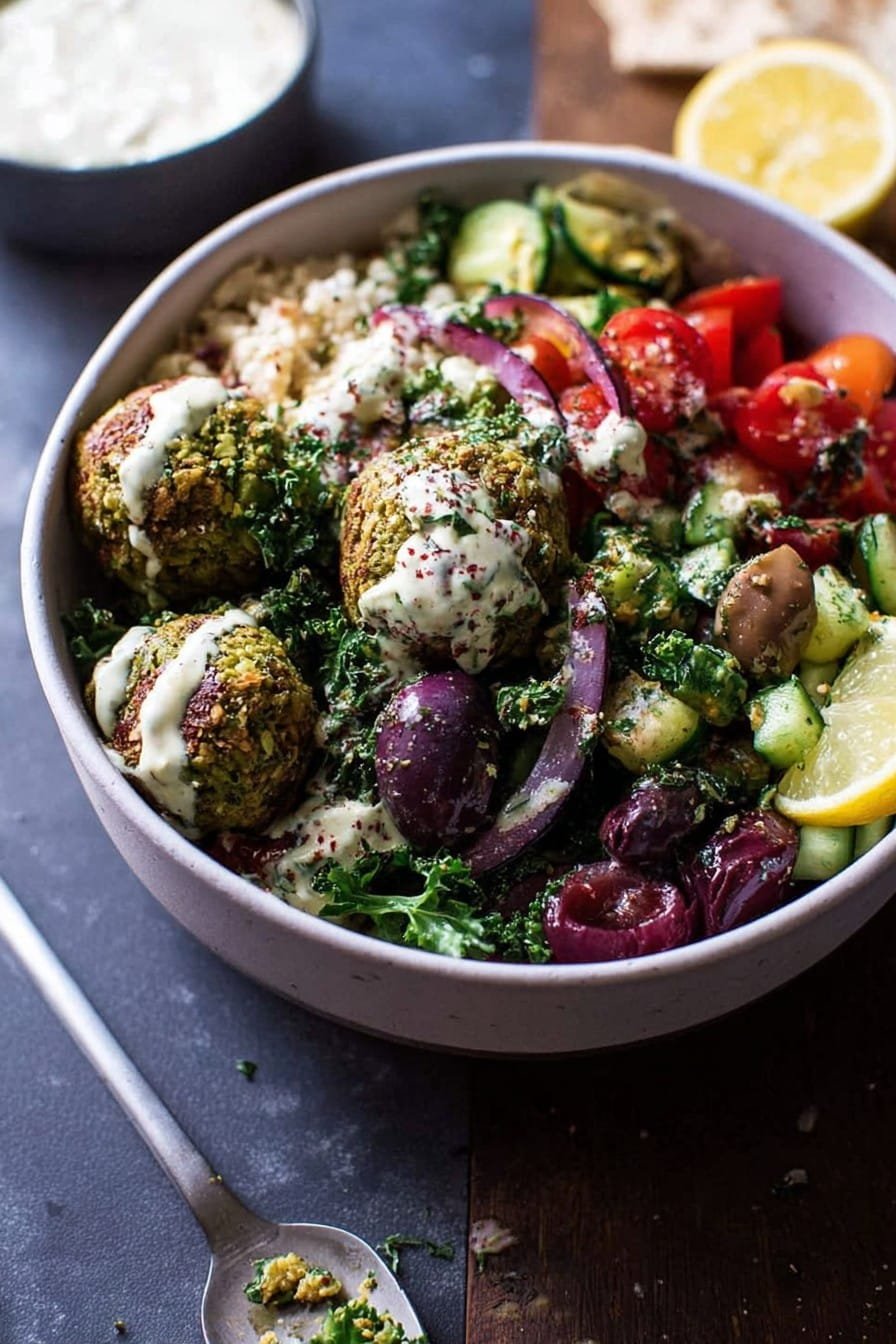
I make this when I want something hearty but still pretend I’m eating light (nobody tell my scales). My family goes crazy for these crispy falafel—my partner even eats the leftovers straight from the fridge, which used to baffle me, but actually… it’s pretty good cold. If you’ve ever felt betrayed by sad take-out bowls, believe me, throwing this together is much better. Oh, and when I’m feeling lazy (which is often), I cut corners by pan-frying instead of deep-frying. Don’t tell the authenticity police.
What You’ll Need (With Some Wiggle Room)
- 1 can (400g) chickpeas, drained and rinsed (I’ve soaked dried ones overnight for extra street cred—both work, honestly)
- 1 small onion, roughly chopped (red onion if you’re feeling fancy, but any’s fine)
- 3 cloves garlic, minced (I’ve even used the pre-minced jar stuff and survived)
- 1 packed cup fresh parsley leaves (sometimes I sneak in cilantro if I’m out—don’t tell grandma)
- 1/2 cup breadcrumbs (panko makes it lighter, but I’ll take whatever’s around—even cracker crumbs once)
- 2 tablespoons all-purpose flour (chickpea flour works if you want to go full mediterranean)
- 1 teaspoon cumin (sometimes a little more, who’s measuring really?)
- 1 teaspoon ground coriander (optional if you haven’t got it)
- 1/2 teaspoon salt (plus extra to taste, I always do a test taste)
- 1/4 teaspoon black pepper
- 1/2 teaspoon baking powder (for that fluffiness—skipped it once, regretted it!)
- Olive oil, for pan-frying (sometimes I do a light spritz for baking instead—it’s fine)
- 2 cups cooked quinoa or couscous (rice in a pinch, don’t stress over it)
- 1 cup cherry tomatoes, halved (any tomato will do, even the wrinkly ones)
- 1 cup cucumber, diced (sometimes I use extra to bulk things up—it’s cheap!)
- 1/2 small red onion, thinly sliced (or just skip if the kids protest)
- 1/2 cup feta cheese, crumbled (or vegan feta if you’re dairy-free—sometimes I skip it entirely)
- 1/3 cup kalamata olives, pitted and sliced (I sneak extras for myself; sorry, not sorry)
- 1/2 cup hummus (store-bought or homemade, but let’s be real, I usually buy it)
- 1 small lemon, cut into wedges (must-have for that zingy finish!)
How to Make These Falafel Bowls Without Losing Your Mind
- First, toss your chickpeas, onion, garlic, parsley, cumin, coriander, salt, pepper, and baking powder into the food processor. If yours is like mine and jams occasionally, just give it a shake and carry on.
- Pulse until you get a crumbly, chunky mixture; you don’t want a paste. This is where I usually sneak a taste; raw falafel mix is weirdly good (don’t judge).
- Scrape into a bowl, stir in breadcrumbs and flour until the mix holds together when you squeeze it; if it’s still too sticky, I just throw in a pinch more flour (not too much, or they’ll be dense—learned that the hard way).
- Shape into golf ball-sized nuggets. I go for imperfect—rustic is in, right?
- In a big frying pan, heat about 1/4 inch olive oil over medium heat; when it shimmers, pop in your falafel balls, flatten a bit, and fry till golden on both sides—usually about 3 minutes a side. (If it looks too brown too soon, turn down the heat; or, just bake at 200°C/400°F for about 25 minutes, flipping once. Still good!)
- Meanwhile, get your base ready: pile up the quinoa or couscous in bowls. Actually, sometimes this step ends up as a mix of grains—leftovers are fair game.
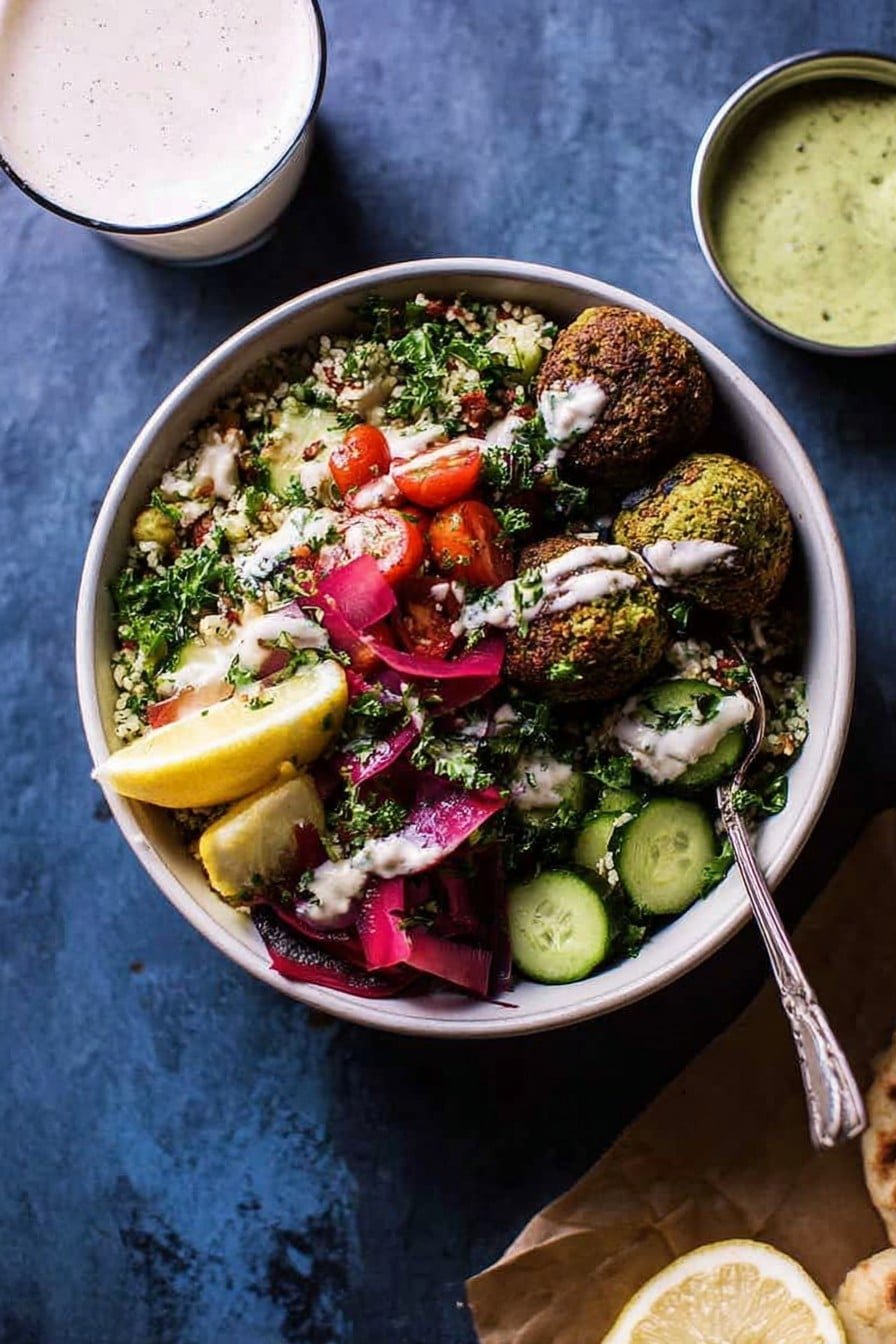
- Arrange tomatoes, cucumber, red onion, olives, and feta on top. The messier the better, in my opinion.
- Top with warm falafel. Yes, they’re best straight from the pan, but even cooled, they’re not too shabby.
- Spoon on a nice cloud of hummus, then finish with a squeeze of lemon over everything. If you want to get wild, drizzle a bit more olive oil or sprinkle some za’atar (I sometimes forget this step and it’s still delicious).
A Few Notes—Take ’Em or Leave ’Em
- If your falafel falls apart a bit, don’t worry. Sometimes the mixture just protests—try more breadcrumbs or chill it for 20 mins before shaping. Works wonders, usually.
- I used to deep-fry, but honestly, too much mess for me. Pan-fry or bake and save yourself a floor mopping.
- I swear it tastes better the next day—something magic happens in the fridge. Or maybe I’m just hungrier?
Other Ways I’ve Tried (The Good, the Odd, the Oops)
- Swap parsley for cilantro—totally works. Mint was… not my favorite. Tasted weird, but maybe you’ll love it?
- Brown rice as the base instead of couscous—surprisingly hearty!
- I tried stuffing the falafel with feta once. Let’s just say, cheese explosion in the pan. Maybe don’t.
- Lettuce wrap version: Not bad on a hot day—kind of like a salad with perks.
Do You Need Fancy Gear? Not Really
I use a food processor (mine’s a scruffy old thing from the charity shop), but honestly, you could mash everything with a fork and some elbow grease if you don’t mind a workout. For the pan? Any decent nonstick will do. I’ve baked them on a battered old tray too.
Stashing Leftovers (If You Somehow Have Any)
Store leftover falafel and toppings separately in airtight containers, in the fridge. They’ll keep for about 3 days, though honestly, in my house it never lasts more than a day! If you want to rewarm falafel, a quick stint in the oven crisps them up much better than nuking in the microwave (they get soggy—bleh).
How I Like to Serve (And a Family Quirk)
I usually pile up the bowls, then let everyone top their own. My youngest insists on extra olives and not a speck of onion. Sometimes we all squeeze lemon at the same time like it’s a contest. Oh, and flatbread on the side is always welcome—especially if you’re mopping up runaway hummus.
Lessons Learned the Hard Way (Maybe You’ll Skip My Blunders)
- I once tried to rush the frying and ended up with a burnt outside and mushy inside—just wait for the oil to heat properly.
- Don’t skimp on the salt in the mix—bland falafel is just sad. Season with your soul.
- Baking works, but turn them halfway or you’ll end up with one flat brown side (ask me how I know…)
Real Questions I Get From Folks Who’ve Tried This
- “Can I use canned chickpeas?” – Yup. Just drain and rinse well. If you’re feeling extra, soak dried overnight—but most days I don’t bother.
- “Mine keep breaking up!?” – More binder (breadcrumb, flour), and chill the mix a while before forming balls. I know, it takes patience.
- “Is deep-frying necessary?” – Not unless you’re feeling brave. I pan-fry or bake. Less mess (and less drama when cleaning up after).
- “Can I freeze the falafel?” – Absolutely. I freeze uncooked ones on a tray, then bag ‘em. Bake or fry direct from frozen—add a few mins to the time.
- “What’s the weirdest add-in you’ve tried?” – I tossed in grated carrot once. It… exists. Not my finest work.
- “How spicy can I make this?” – Go wild. Chili flakes, harissa drizzled over, hot sauce on the side (my brother dumps Sriracha till everything’s pinkish).
I tend to think you’ll get the hang of it after the first go, so don’t sweat the small stuff. Actually, even the mess-ups taste good—there’s magic in imperfection, right?
Ingredients
- 1 can (400g) chickpeas, drained and rinsed (I’ve soaked dried ones overnight for extra street cred—both work, honestly)
- 1 small onion, roughly chopped (red onion if you’re feeling fancy, but any’s fine)
- 3 cloves garlic, minced (I’ve even used the pre-minced jar stuff and survived)
- 1 packed cup fresh parsley leaves (sometimes I sneak in cilantro if I’m out—don’t tell grandma)
- 1/2 cup breadcrumbs (panko makes it lighter, but I’ll take whatever’s around—even cracker crumbs once)
- 2 tablespoons all-purpose flour (chickpea flour works if you want to go full Mediterranean)
- 1 teaspoon cumin (sometimes a little more, who’s measuring really?)
- 1 teaspoon ground coriander (optional if you haven’t got it)
- 1/2 teaspoon salt (plus extra to taste, I always do a test taste)
- 1/4 teaspoon black pepper
- 1/2 teaspoon baking powder (for that fluffiness—skipped it once, regretted it!)
- Olive oil, for pan-frying (sometimes I do a light spritz for baking instead—it’s fine)
- 2 cups cooked quinoa or couscous (rice in a pinch, don’t stress over it)
- 1 cup cherry tomatoes, halved (any tomato will do, even the wrinkly ones)
- 1 cup cucumber, diced (sometimes I use extra to bulk things up—it’s cheap!)
- 1/2 small red onion, thinly sliced (or just skip if the kids protest)
- 1/2 cup feta cheese, crumbled (or vegan feta if you’re dairy-free—sometimes I skip it entirely)
- 1/3 cup kalamata olives, pitted and sliced (I sneak extras for myself; sorry, not sorry)
- 1/2 cup hummus (store-bought or homemade, but let’s be real, I usually buy it)
- 1 small lemon, cut into wedges (must-have for that zingy finish!)
Instructions
-
1First, toss your chickpeas, onion, garlic, parsley, cumin, coriander, salt, pepper, and baking powder into the food processor. If yours is like mine and jams occasionally, just give it a shake and carry on.
-
2Pulse until you get a crumbly, chunky mixture; you don’t want a paste. This is where I usually sneak a taste; raw falafel mix is weirdly good (don’t judge).
-
3Scrape into a bowl, stir in breadcrumbs and flour until the mix holds together when you squeeze it; if it’s still too sticky, I just throw in a pinch more flour (not too much, or they’ll be dense—learned that the hard way).
-
4Shape into golf ball-sized nuggets. I go for imperfect—rustic is in, right?
-
5In a big frying pan, heat about 1/4 inch olive oil over medium heat; when it shimmers, pop in your falafel balls, flatten a bit, and fry till golden on both sides—usually about 3 minutes a side. (If it looks too brown too soon, turn down the heat; or, just bake at 200°C/400°F for about 25 minutes, flipping once. Still good!)
-
6Meanwhile, get your base ready: pile up the quinoa or couscous in bowls. Actually, sometimes this step ends up as a mix of grains—leftovers are fair game.
-
7Arrange tomatoes, cucumber, red onion, olives, and feta on top. The messier the better, in my opinion.
-
8Top with warm falafel. Yes, they’re best straight from the pan, but even cooled, they’re not too shabby.
-
9Spoon on a nice cloud of hummus, then finish with a squeeze of lemon over everything. If you want to get wild, drizzle a bit more olive oil or sprinkle some za’atar (I sometimes forget this step and it’s still delicious).
Approximate Information for One Serving
Nutrition Disclaimers
Number of total servings shown is approximate. Actual number of servings will depend on your preferred portion sizes.
Nutritional values shown are general guidelines and reflect information for 1 serving using the ingredients listed, not including any optional ingredients. Actual macros may vary slightly depending on specific brands and types of ingredients used.
To determine the weight of one serving, prepare the recipe as instructed. Weigh the finished recipe, then divide the weight of the finished recipe (not including the weight of the container the food is in) by the desired number of servings. Result will be the weight of one serving.
Did you make this recipe?
Please consider Pinning it!