You know those recipes you turn to when you’ve had, I dunno, the kind of day that makes you want to order takeout but then you remember you can actually cook something genuinely delicious with almost no fuss? This slow roasted salmon with citrus and capers is exactly that lifesaver for me. I actually made it for my cousin’s birthday last winter—not because I’m fancy, but because I needed something impressive that was basically foolproof (and didn’t involve me hovering nervously over the stove). And let’s be honest: anything that lets you dump things onto a tray and pop it in the oven while you pretend you’re tidying up is a recipe after my own heart!
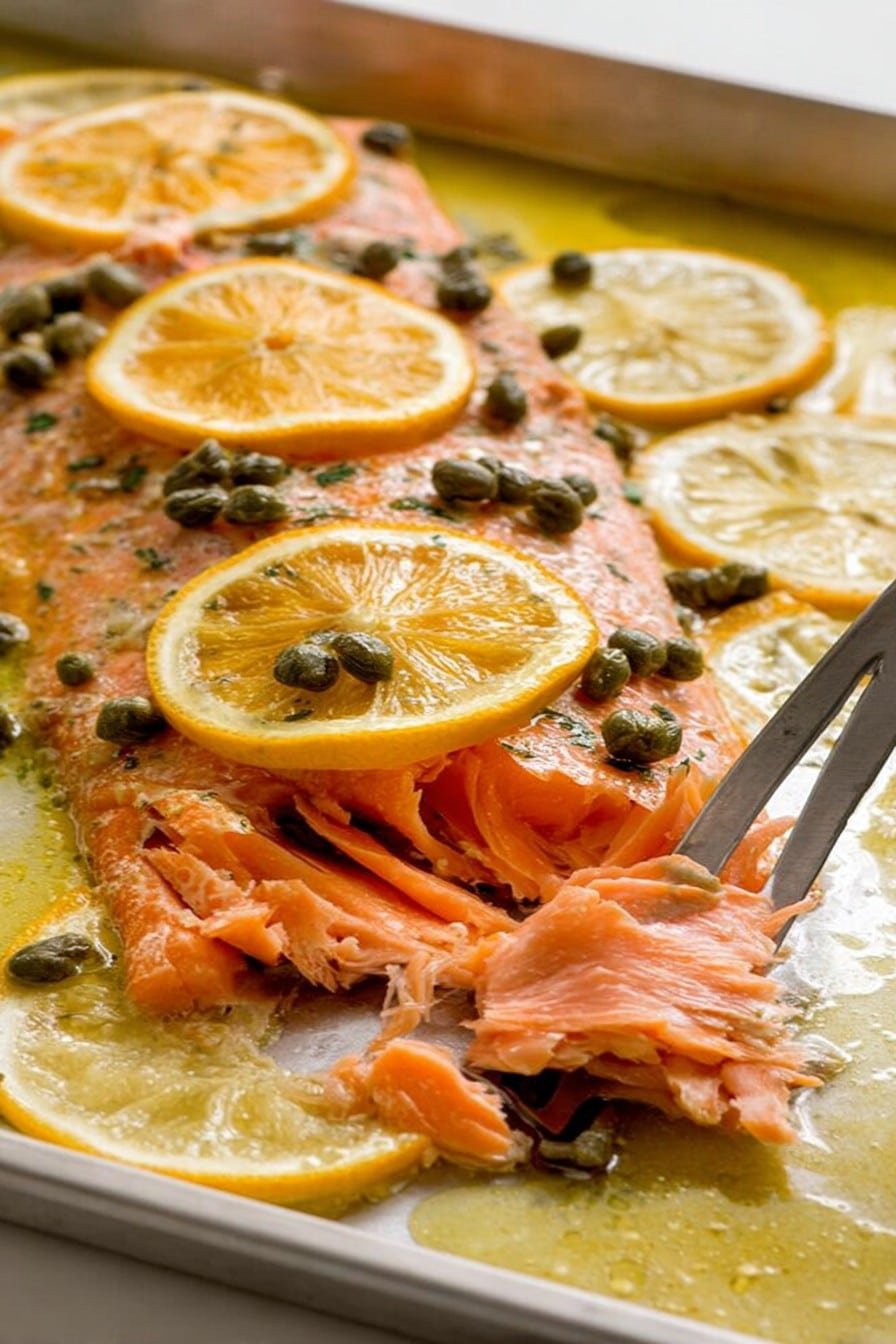
Why You’ll Love This Salmon (Trust Me)
I make this when I want something light but still hearty enough to qualify as dinner. My family goes crazy for this (though my brother did once complain about, and this is a quote, “the weird little green things”—the capers), and it’s basically my secret weapon for Sunday lunches when I’d really rather be reading a book. The citrus makes it taste bright, the slow roast keeps the salmon all silky, and the capers—well, if you’re into briny snacks, they’re magic. And if your oven runs hot (mine does, stubborn thing), just keep an eye on it so you don’t end up with salmon jerky.
What You’ll Need (Plus Some Swaps!)
- 1 large side of salmon (about 1.2 kg, skin on preferred, but trust me, I’ve used skinless and survived)
- 2 oranges, sliced into rounds (sometimes I use blood oranges for drama, but regular oranges work fine—you do you)
- 1 lemon, sliced into rounds (when I’ve run out, a juicy lime sorta does the trick—just a bit sharper)
- 3 tablespoons capers, rinsed (my grandmother always insisted on the salt-packed ones, but if you have the brined supermarket kind, honestly, just drain and use ’em)
- 1 small red onion, thinly sliced (or shallots if you’re feeling posh)
- 4 tablespoons olive oil (sometimes I just do a big glug—who’s measuring?)
- Fresh dill, a generous handful, roughly chopped (tarragon’s good if you don’t have dill—no big deal)
- Salt and cracked black pepper to taste
How To Pull It Together (It’s Easier Than It Sounds)
- Preheat your oven to 120°C (about 250°F). Low and slow—that’s the magic here. If your oven is a bit rebellious, set it as low as it’ll go and just keep an eye on things.
- Line a big old baking tray with parchment (or foil, if you’re out of parchment—works fine, just not as pretty), and lay the salmon skin-side down. If it overlaps a little at the edges, well, mine always does and no one’s complained.
- Scatter the orange and lemon slices all over the salmon, then tuck in your red onion rings here and there. It might look chaotic, and that’s exactly how it’s meant to look.
- Spoon over the capers, then drizzle everything with olive oil. Don’t be stingy. A little puddle is a sign you did it right.
- Season generously with salt and loads of cracked black pepper. (Here’s where I sometimes sneak a little taste of the capers, for quality control—call it chef’s privilege.)
- Top with most of your dill (save a bit for garnish if you’re feeling fancy) and pop the tray in the oven, uncovered.
- Bake for about 35–40 minutes. The salmon should look barely cooked and kind of silky—don’t panic if you see a white film form (that’s just albumin; totally normal, though sounds way fancier than it is). If you prefer it more cooked, just give it an extra 5–10 minutes.
- Slide it out, garnish with the rest of your dill and maybe a fresh squeeze of lemon if you’re into that. Serve it right away, though I secretly think it tastes even better at room temp—but don’t tell my family.
Notes from the Trenches
- So, one time I forgot to rinse the capers and it was almost salty enough to float a boat—rinse them, seriously.
- If you only have wild salmon, keep an extra eye on it—it cooks fast and dries up when you blink. Lesson: don’t blink.
- Red onions turn sweet and lovely; if you hate them raw, don’t worry, roasting sorts them out.
Variations I’ve Actually Tried (And One Fail)
- I tossed some thin fennel slices in once—amazing with the citrus, would do again.
- Tried swapping the dill for parsley. It was…fine. But not magic.
- Once attempted pink grapefruit instead of lemon. Maybe it was just a dud grapefruit, but nope, not for me. Might work for someone else though!
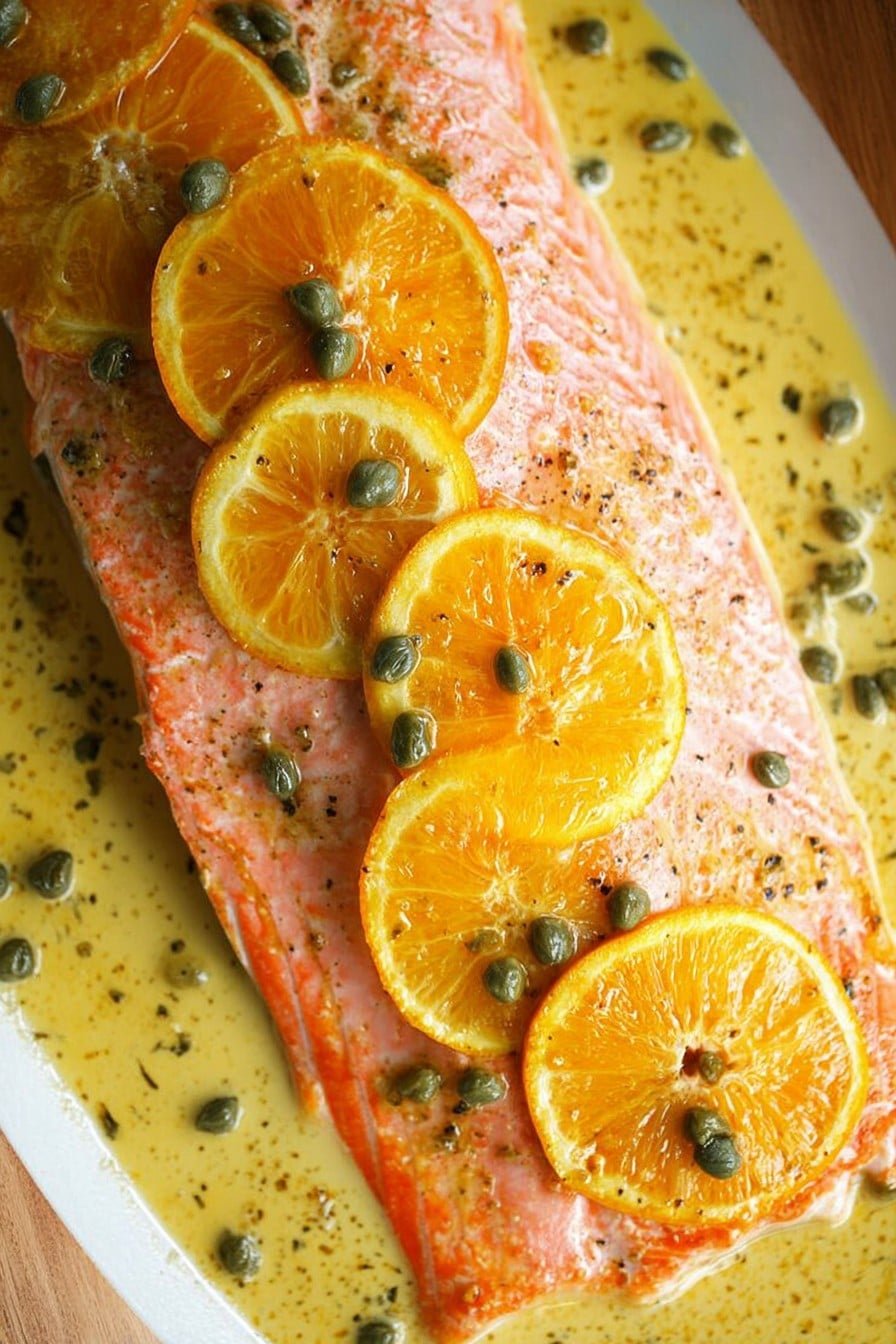
You Don’t Need All the Fancy Gear
Baking tray and parchment paper is ideal (parchment helps with sticking and makes cleanup a breeze—learned the hard way). But if you’re out, even a big roasting pan or whatever ovenproof dish you have will work. I wouldn’t recommend using a skillet unless it’s massive—it can get cramped real fast.
How To Store (If There’s Any Leftover, which is Rare)
Pop any leftovers in an airtight container and keep it in the fridge. It’ll last two days, maybe three, though honestly, in my house it never lasts more than a day! Actually, cold salmon makes for a pretty decent sandwich filler, if you’re game.
How I Serve It (aka—the Best Part)
I love flaking the salmon onto a big platter, arranging the roasted citrus and onions messily over the top, and serving it with baby potatoes tossed with olive oil and more dill. Sometimes I bulk out the meal with a green salad, but my daughter says it’s best straight and unadorned. Oh, and crusty bread! Nonnegotiable if you ask me.
Lessons Learned (AKA, Don’t Do What I Did)
- Don’t rush the roasting—if you crank the heat, you lose all the soft, confit-like texture. Learned that the hard way during a hungry Tuesday night panic.
- Don’t skip the oil. Tried it once to “save calories” and got a dried-out mess. Never again.
- Actually, don’t use pre-sliced supermarket citrus; it goes mushy. Learned that on a lazy day.
FAQ (No Silly Questions Here)
- Can I use frozen salmon? Totally. Just thaw it completely and pat it really dry—learned this form a friend who only cooks with frozen fish.
- Do I have to use dill? You don’t, but try to use something fresh and herby. I once did this with chopped basil in a pinch—was nice, just different.
- Can I make this ahead? Yep! It’s quite forgiving. Actually, it’s one of those rare fish dishes I think tastes even better if you let it hang out at room temp for a bit before eating. Not too long, though.
- What if my salmon is thinner/thicker? Just bake it a bit less for thin pieces, a bit more if it’s a chonk (as my teenager says). Peek at 30 minutes just in case.
- Is the salmon supposed to look so…soft? Yes! That’s the trick. It’s barely cooked and super moist. But if you like yours firmer, keep cooking. No shame.
Little extra: If you’ve never bought capers before and accidentally get caperberries instead—don’t stress. Chop them up and toss them in; they add a different tang, but it works. Anyway, hope you enjoy this—give it a go when you need a win, or just something easy and real at the end of a long, weird week.
Ingredients
- 1 large side of salmon (about 1.2 kg, skin on preferred, but trust me, I’ve used skinless and survived)
- 2 oranges, sliced into rounds (sometimes I use blood oranges for drama, but regular oranges work fine—you do you)
- 1 lemon, sliced into rounds (when I’ve run out, a juicy lime sorta does the trick—just a bit sharper)
- 3 tablespoons capers, rinsed (my grandmother always insisted on the salt-packed ones, but if you have the brined supermarket kind, honestly, just drain and use ’em)
- 1 small red onion, thinly sliced (or shallots if you’re feeling posh)
- 4 tablespoons olive oil (sometimes I just do a big glug—who’s measuring?)
- Fresh dill, a generous handful, roughly chopped (tarragon’s good if you don’t have dill—no big deal)
- Salt and cracked black pepper to taste
Instructions
-
1Preheat your oven to 120°C (about 250°F). Low and slow—that’s the magic here. If your oven is a bit rebellious, set it as low as it’ll go and just keep an eye on things.
-
2Line a big old baking tray with parchment (or foil, if you’re out of parchment—works fine, just not as pretty), and lay the salmon skin-side down. If it overlaps a little at the edges, well, mine always does and no one’s complained.
-
3Scatter the orange and lemon slices all over the salmon, then tuck in your red onion rings here and there. It might look chaotic, and that’s exactly how it’s meant to look.
-
4Spoon over the capers, then drizzle everything with olive oil. Don’t be stingy. A little puddle is a sign you did it right.
-
5Season generously with salt and loads of cracked black pepper. (Here’s where I sometimes sneak a little taste of the capers, for quality control—call it chef’s privilege.)
-
6Top with most of your dill (save a bit for garnish if you’re feeling fancy) and pop the tray in the oven, uncovered.
-
7Bake for about 35–40 minutes. The salmon should look barely cooked and kind of silky—don’t panic if you see a white film form (that’s just albumin; totally normal, though sounds way fancier than it is). If you prefer it more cooked, just give it an extra 5–10 minutes.
-
8Slide it out, garnish with the rest of your dill and maybe a fresh squeeze of lemon if you’re into that. Serve it right away, though I secretly think it tastes even better at room temp—but don’t tell my family.
Approximate Information for One Serving
Nutrition Disclaimers
Number of total servings shown is approximate. Actual number of servings will depend on your preferred portion sizes.
Nutritional values shown are general guidelines and reflect information for 1 serving using the ingredients listed, not including any optional ingredients. Actual macros may vary slightly depending on specific brands and types of ingredients used.
To determine the weight of one serving, prepare the recipe as instructed. Weigh the finished recipe, then divide the weight of the finished recipe (not including the weight of the container the food is in) by the desired number of servings. Result will be the weight of one serving.
Did you make this recipe?
Please consider Pinning it!